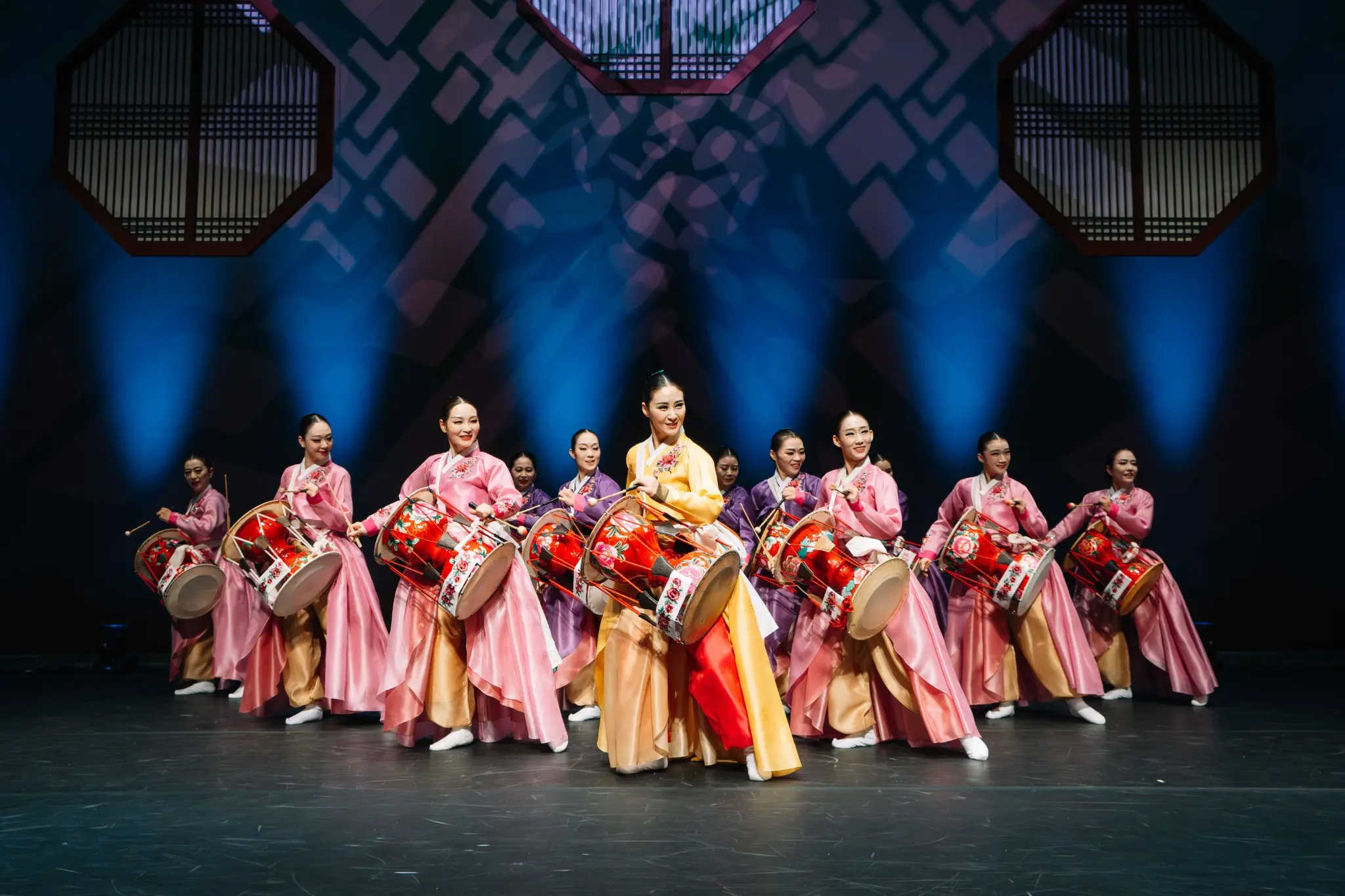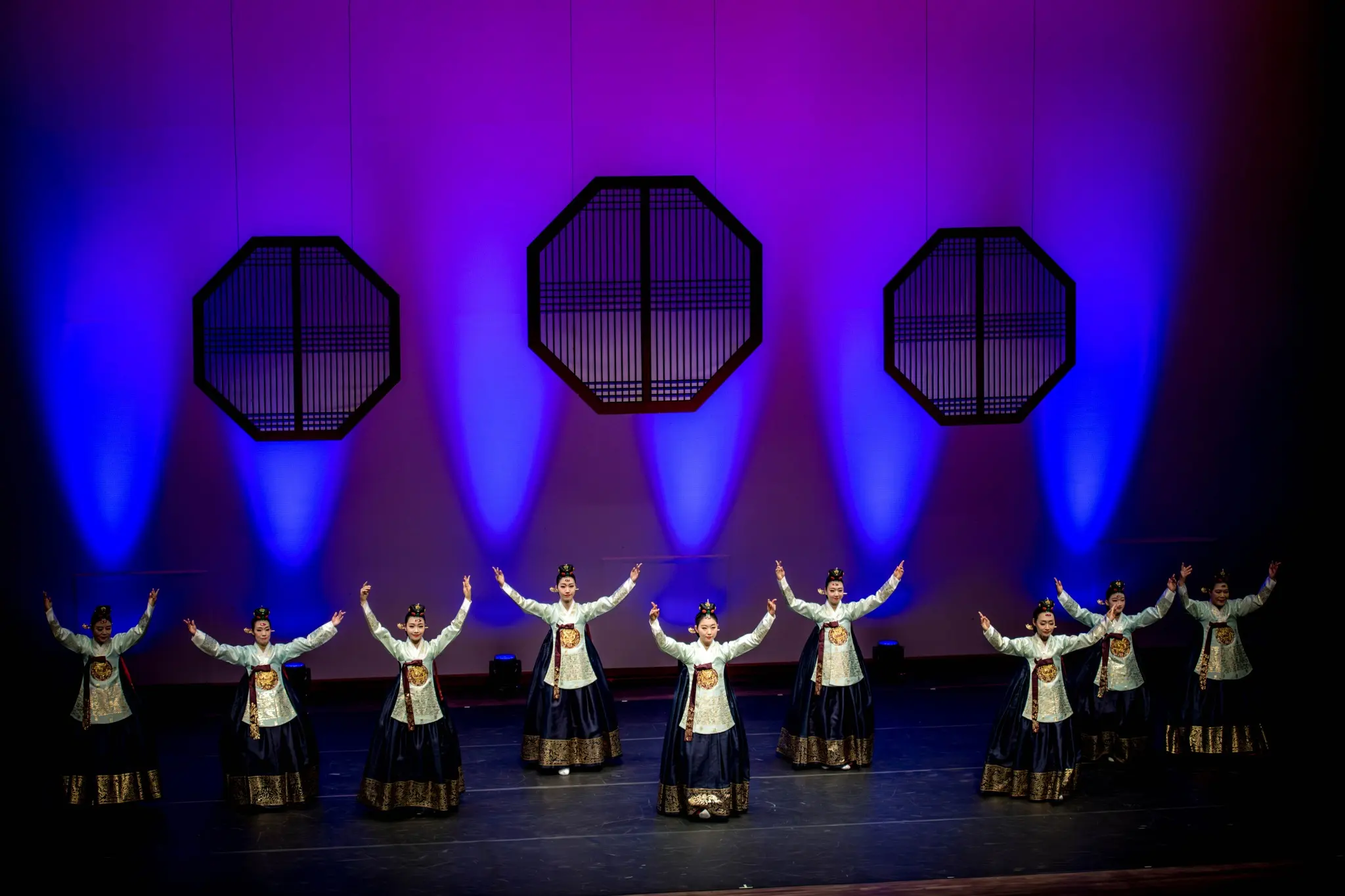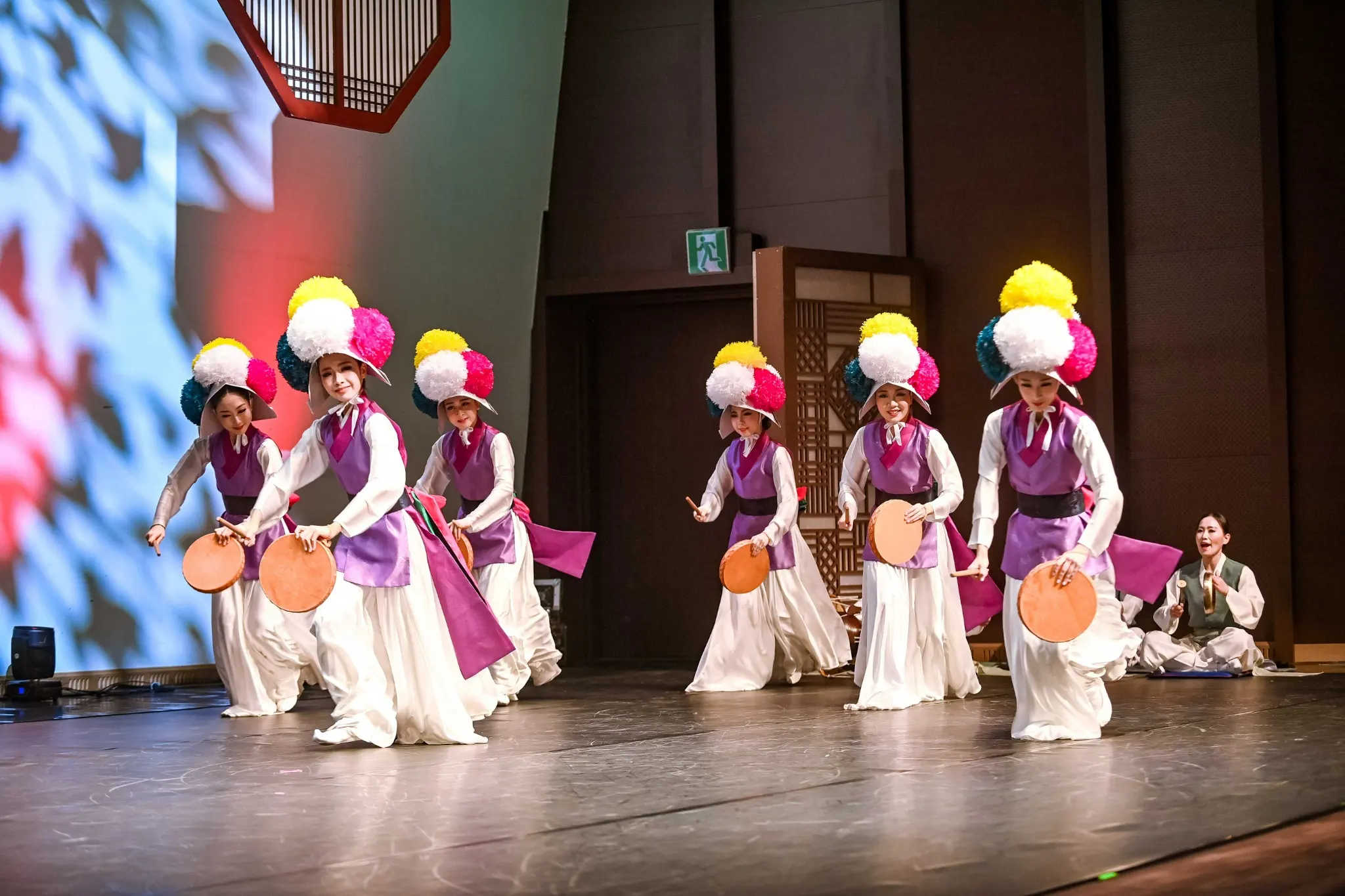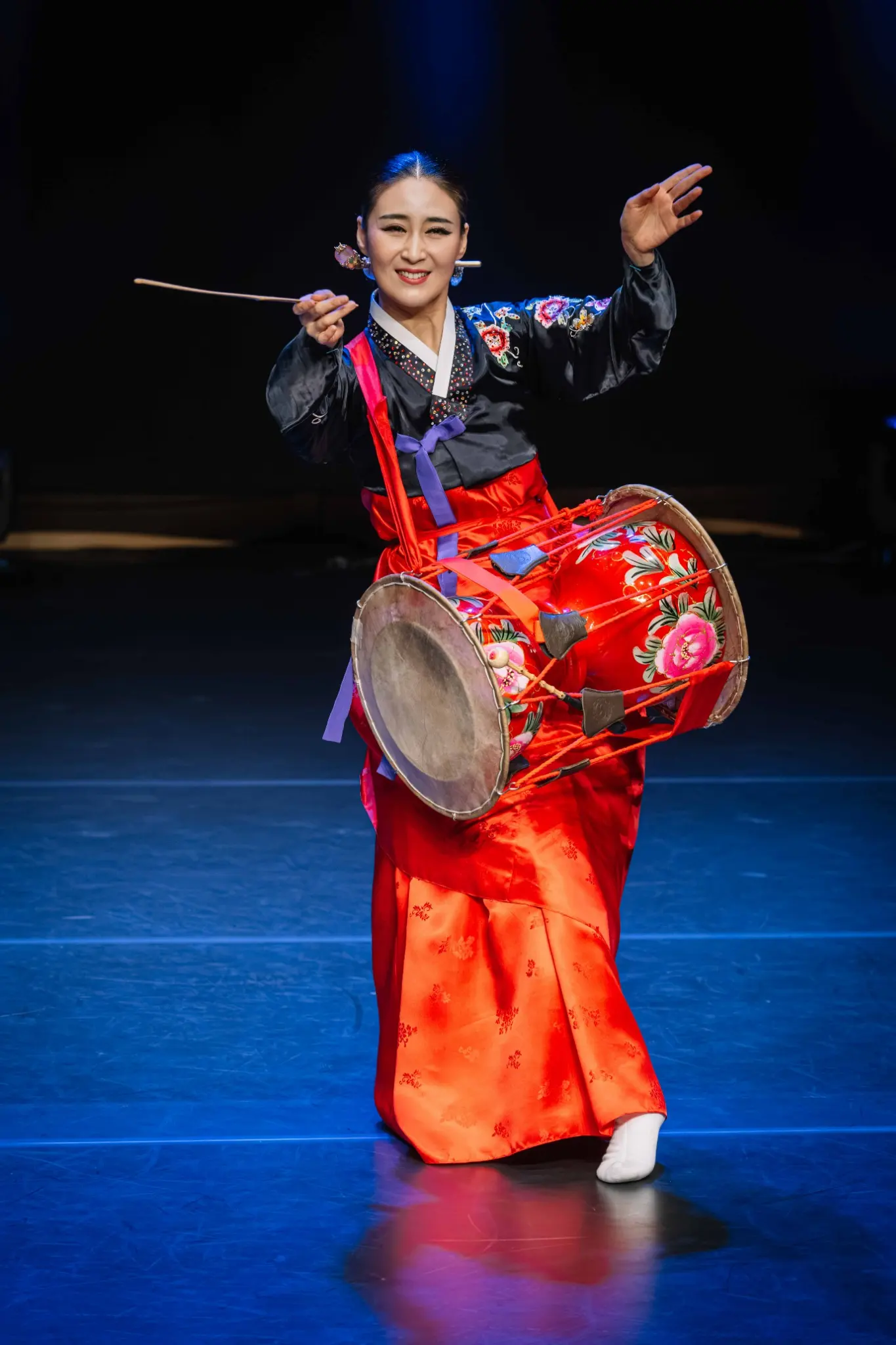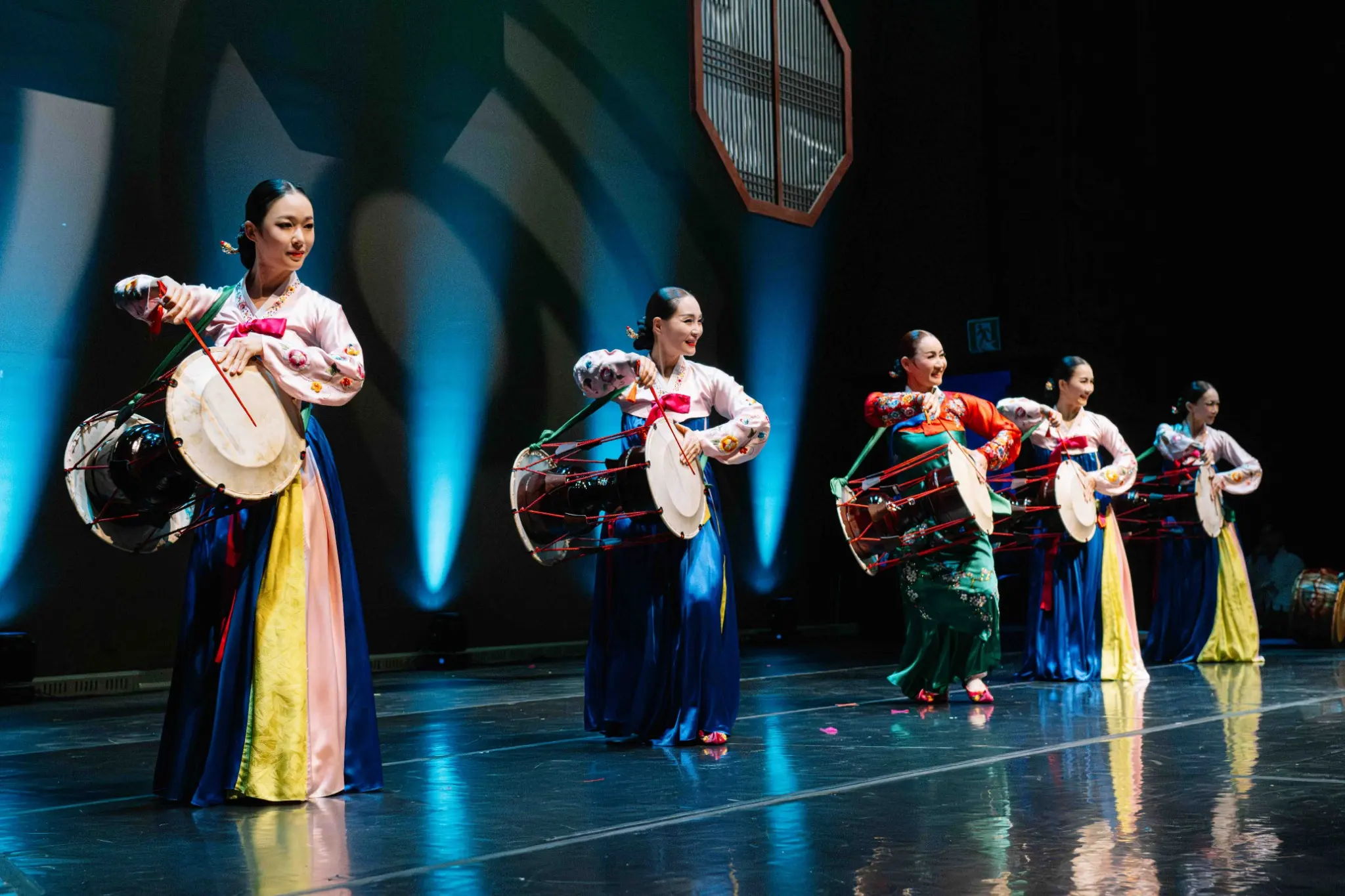
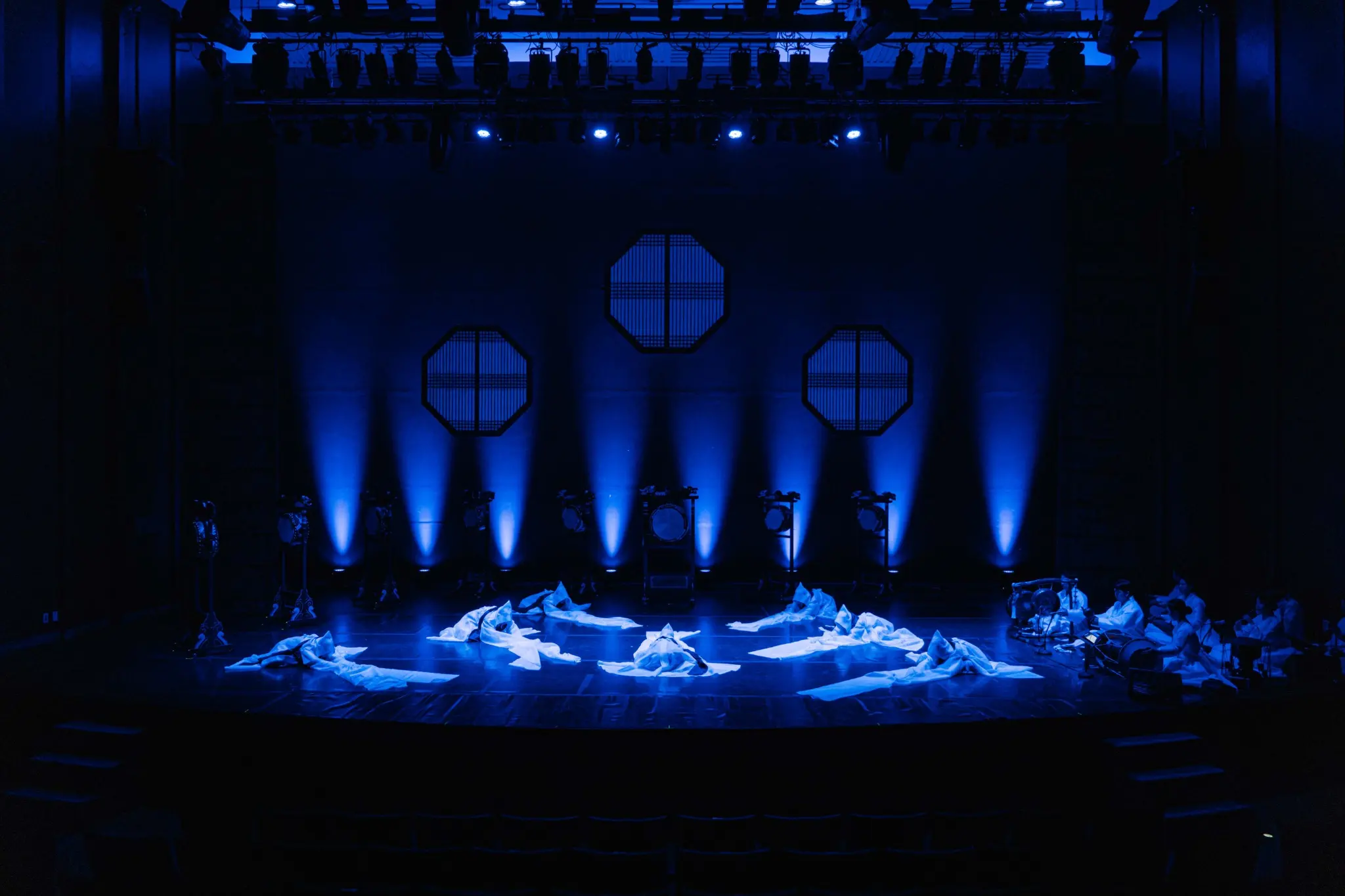
Kim Won Kyoung Dance Troupes

Kim Won Kyoung Dance Company · Korean Traditional Dance

Carrying tradition forward,
speaking to our time
through dance.

Tradition · Creation · People

OUR LANGUAGE

  • Line 線
  • Breath 呼吸
  • Jangdan 長短
  • Restraint 節制
  • Heung 興

We inherit the profound spirit and artistic value of Korean traditional dance
and share them with audiences of today.

Kim Won Kyoung Dance Company preserves the original forms of Korean dance while refusing to leave tradition in the past. Line, breath, jangdan, restraint and sinmyeong are unfolded anew in the language of today’s stage.

Through the creation and growth of professional dancers, engagement with regional arts, and international cultural exchange, we keep Korean traditional dance alive as a living art of the present.

“Carrying tradition forward, nurturing people,
and communicating with the times through dance.”
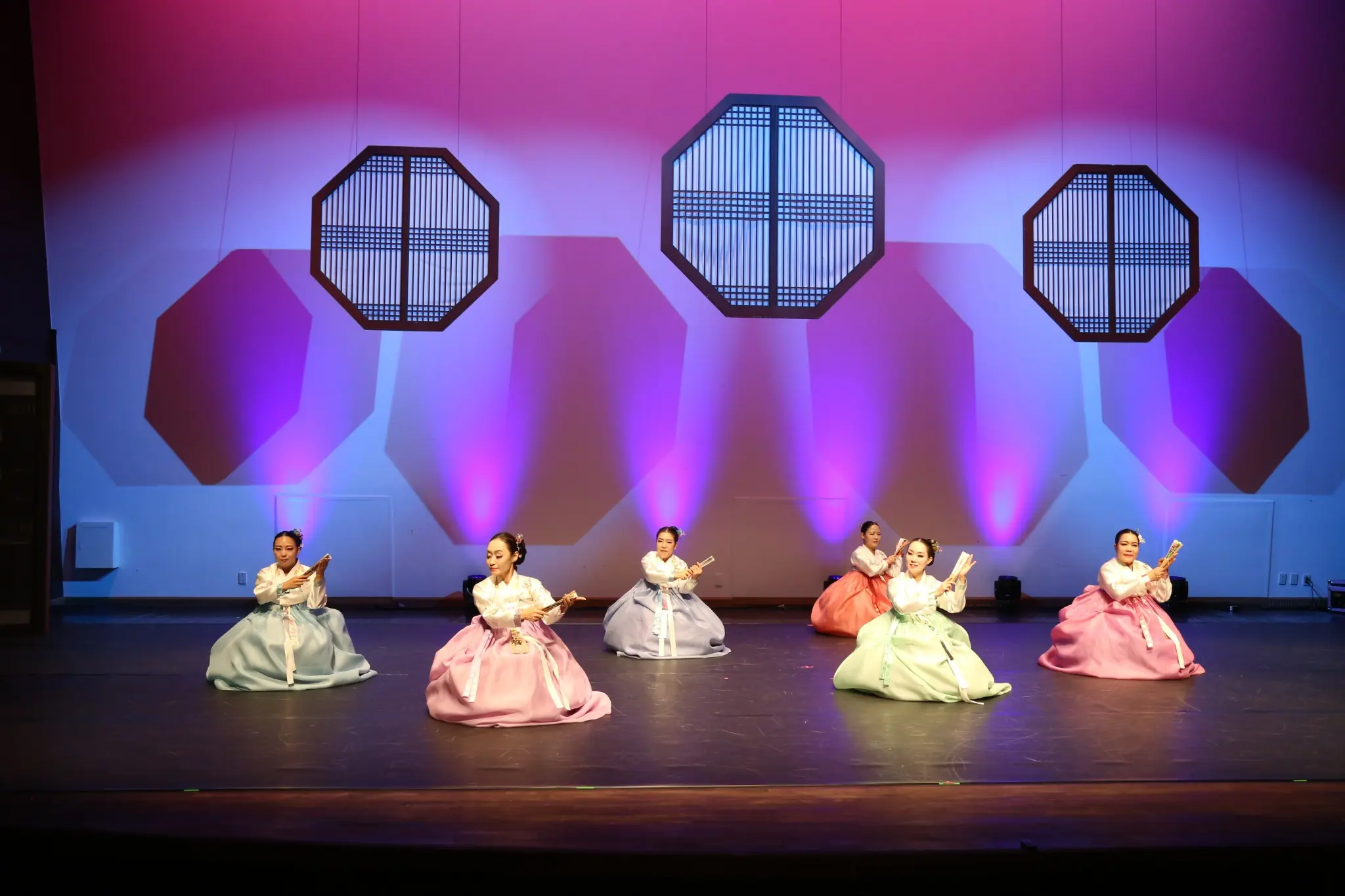
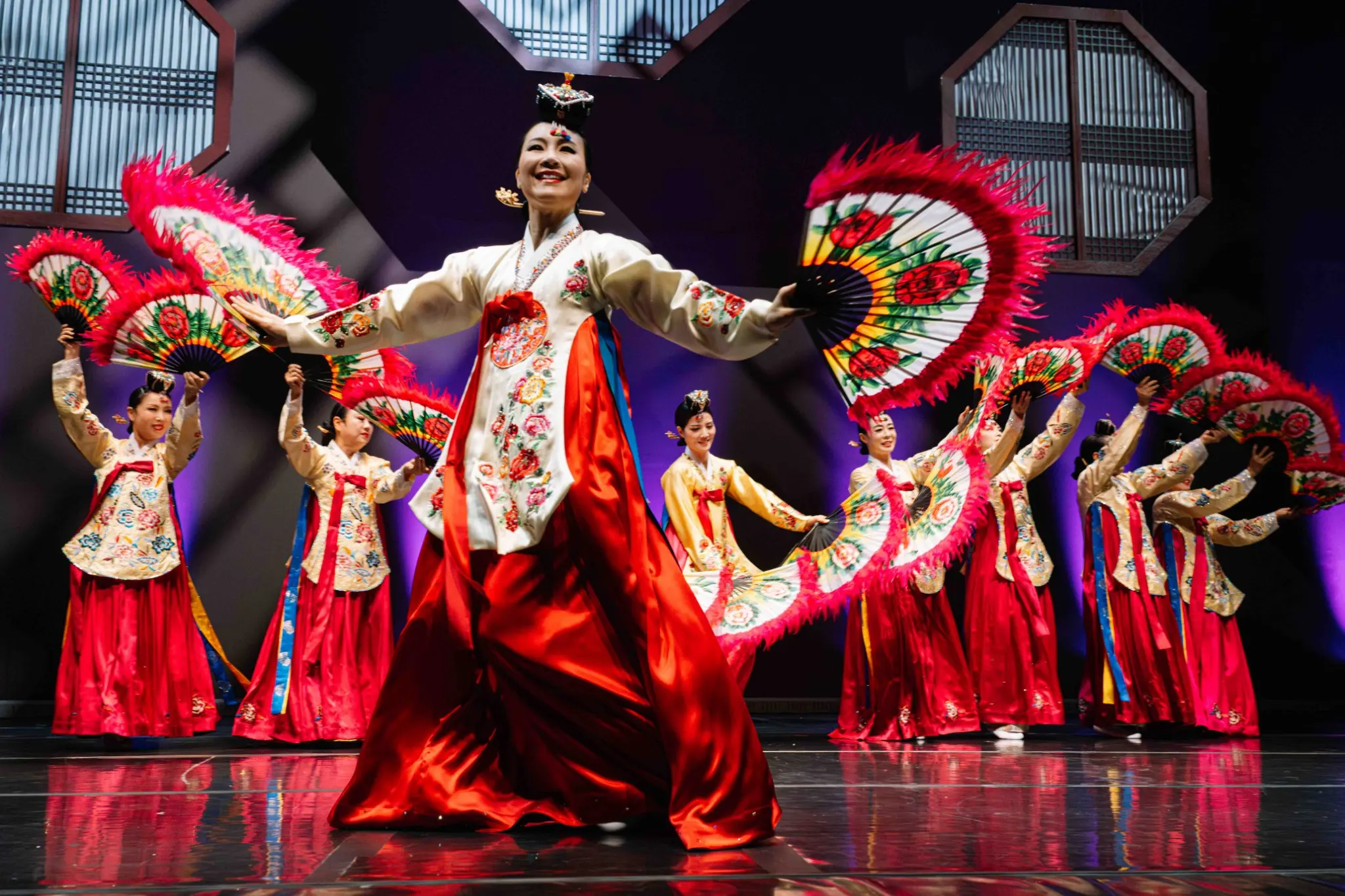
김원경무용단 부채춤 공연

THE COMPANY

Where the depth of tradition
meets the sensibility of today

Founded in 2017, Kim Won Kyoung Dance Company is a professional performing arts company dedicated to the inheritance and development of Korean traditional dance.

Its repertoire includes Seungmu, Buchaechum, Pungnyu, Janggochum, Sambukchum, Beokkuchum and Jindo Bukchum, presented through regular productions, curated performances and solo stages.

Rooted in authenticity while bringing audiences closer to the stage, the company combines refined staging with live gugak music to create a performing art in which sight and sound breathe together.

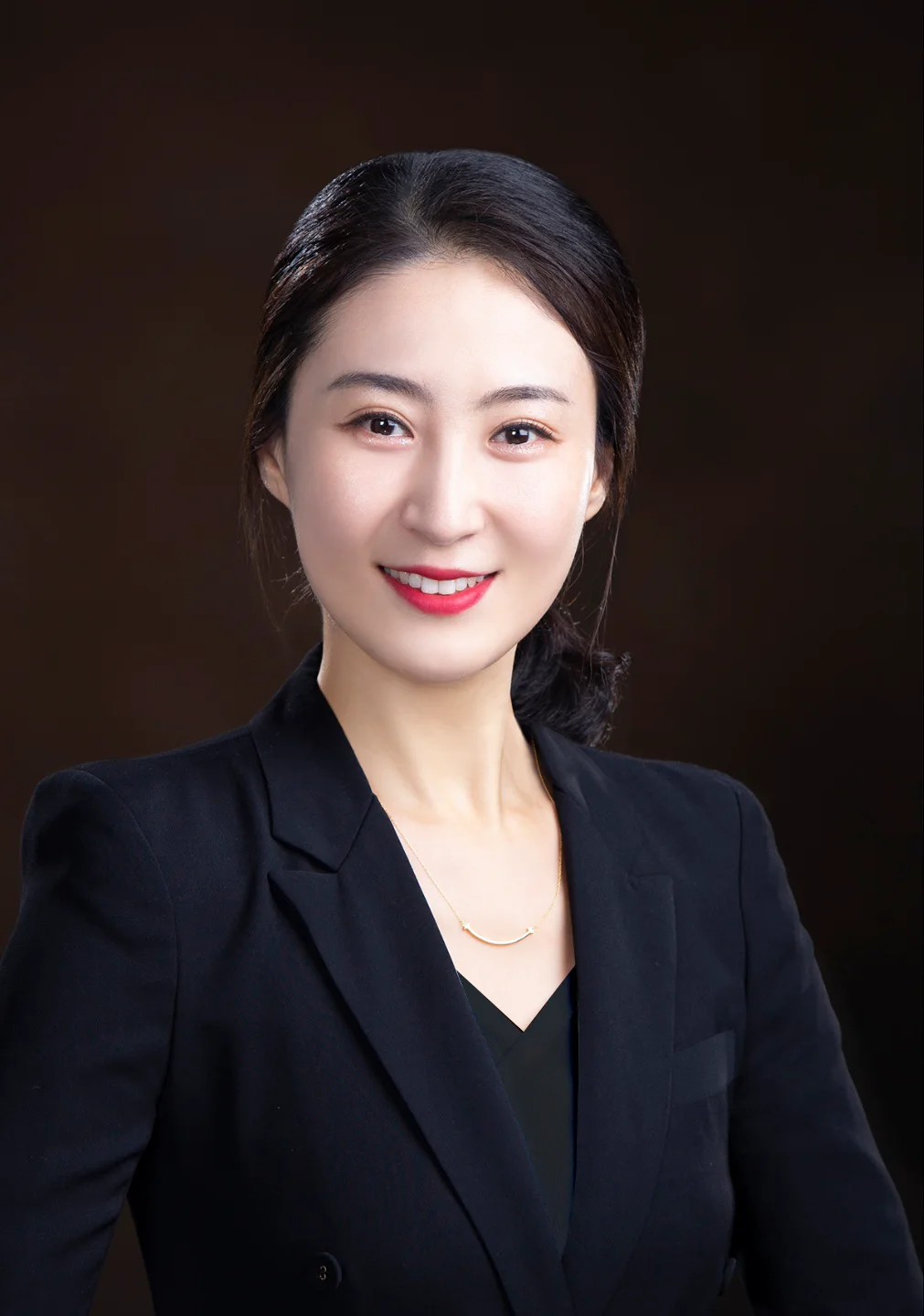
Kim Won Kyoung

ARTISTIC DIRECTOR

Kim Won Kyoung

Preserving the original form of dance,
bringing completeness to stage art.

A dancer who has worked for many years in Korean traditional dance, both in the field and on professional stages, Kim Won Kyoung is devoted to preserving tradition and nurturing the next generation. She values the fundamentals and original forms of Korean dance while pursuing performances that resonate with contemporary audiences.

Artistic Director & Representative, Kim Won Kyoung Dance Company
Former permanent member, Daejeon Metropolitan Dance Theater
Completer of Cheoyongmu, National Intangible Heritage
Completer of Seungmu, National Intangible Heritage
Korean traditional dance performances & works
Traditional dance education & mentoring

WORKS

Repertoire

승무(이매방류) 공연 사진

Seungmu (Yi Mae-bang Style)

National Intangible Heritage Seungmu (Yi Mae-bang style) is a refined traditional dance of great dignity. Its drum rhythms, vigorous jangsam sleeve movements, and delicate footwork embody the essence of jeong–jung–dong: stillness, restrained movement, and dynamic motion.

The Yi Mae-bang style is a Honam-form Seungmu rooted in Jeolla Province. Master Ubong Yi Mae-bang learned the dance around 1935 from his grandfather Yi Dae-jo and devoted more than half a century to preserving and refining it into an artistic expression of exceptional beauty.
풍류 공연 사진

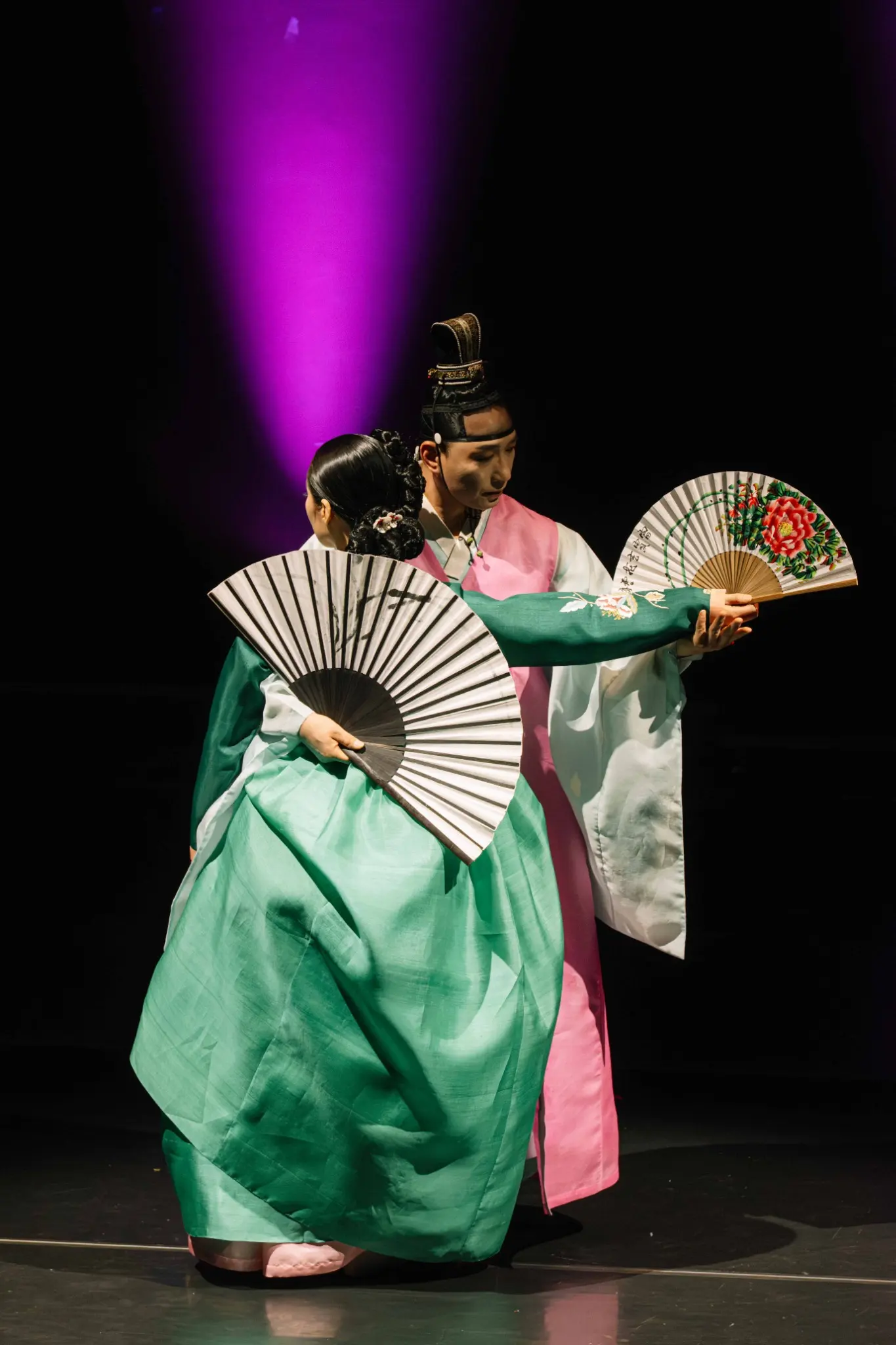
Pungnyu (風流)

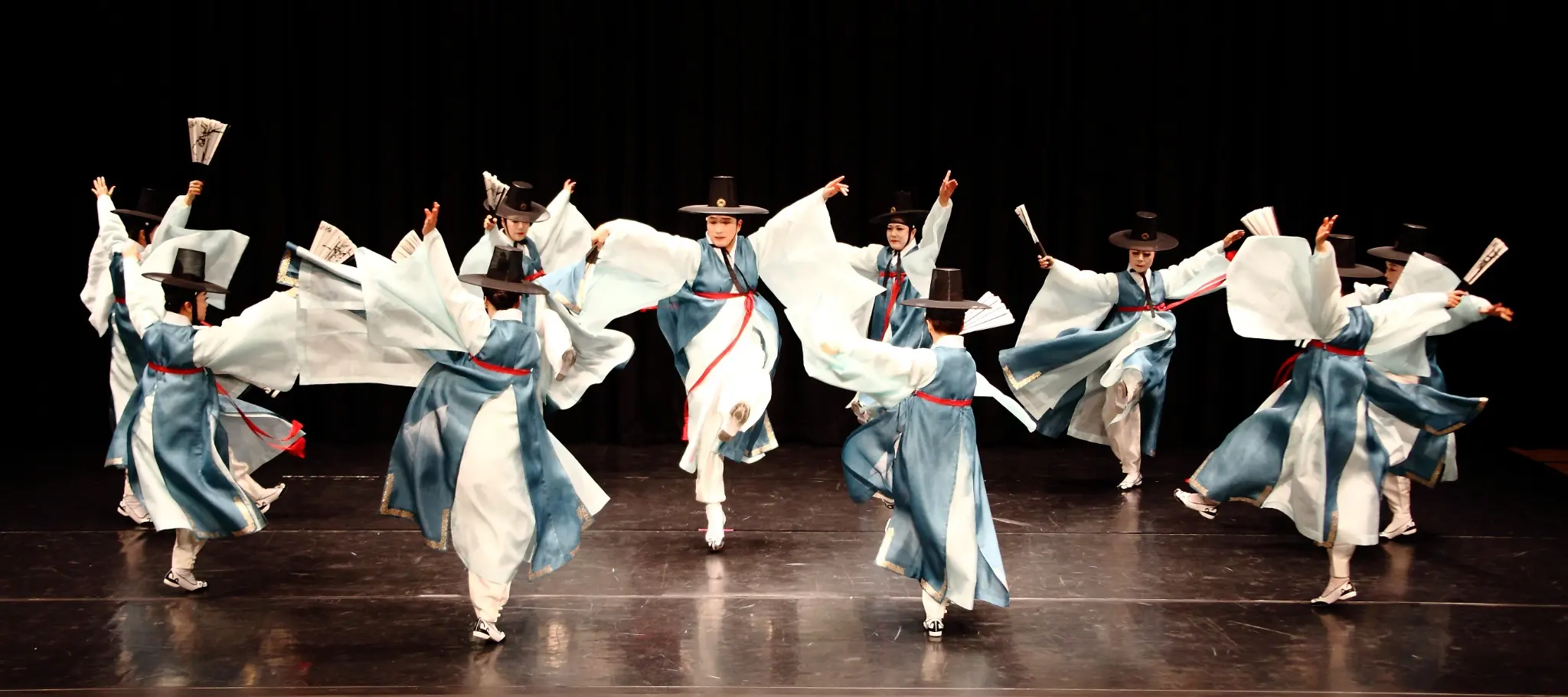
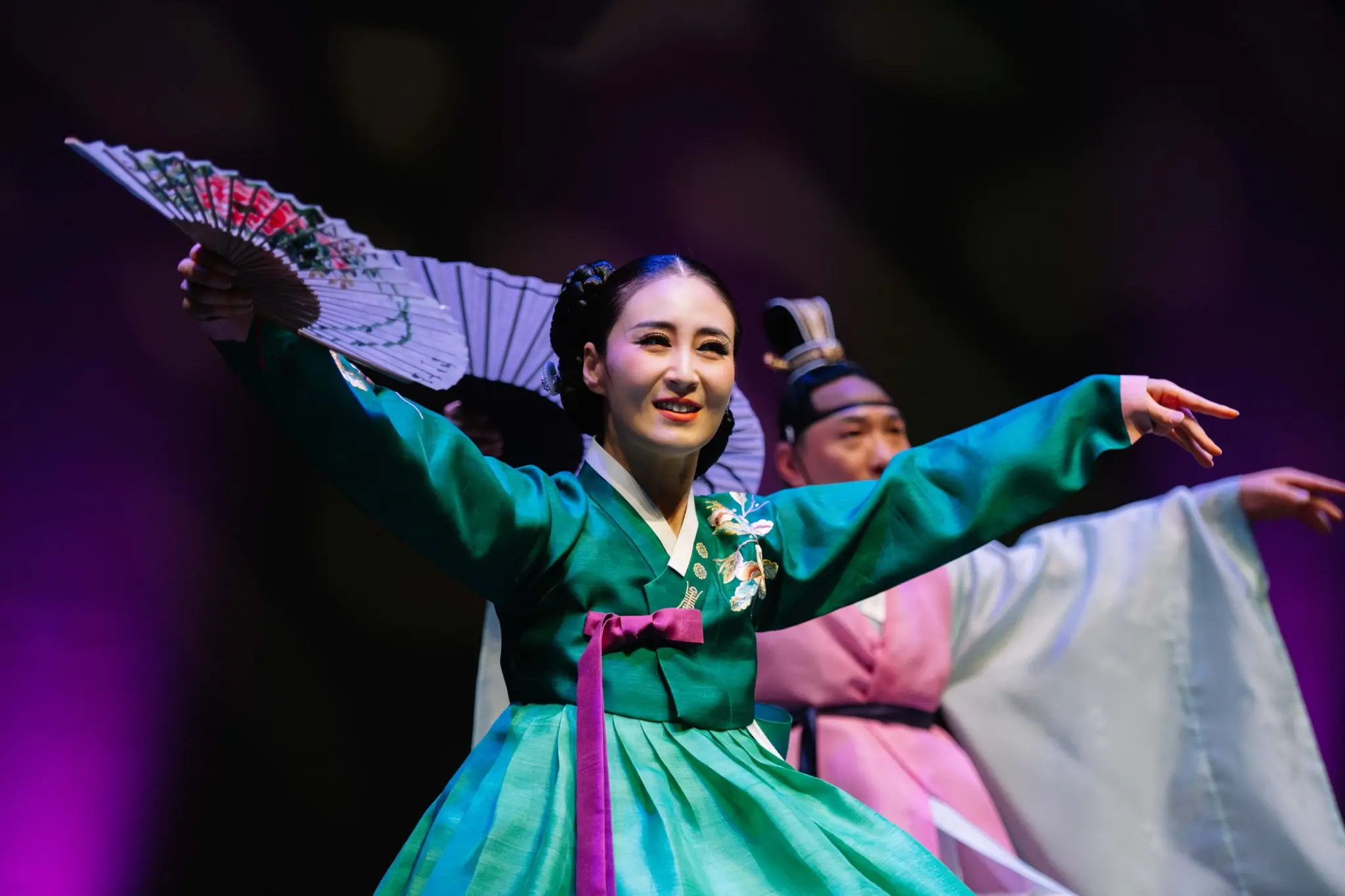
Using a fan, this dance weaves traditional movements into calm yet tenacious, delicate yet poignant motion. It portrays the inner world of seonbi—cultivated scholars who understood pungnyu and could surrender themselves spontaneously to jeong, meot, and heung.

It is presented as an elegant male-female duet, combining masculine dignity with the refined technique and feminine grace of the gain.

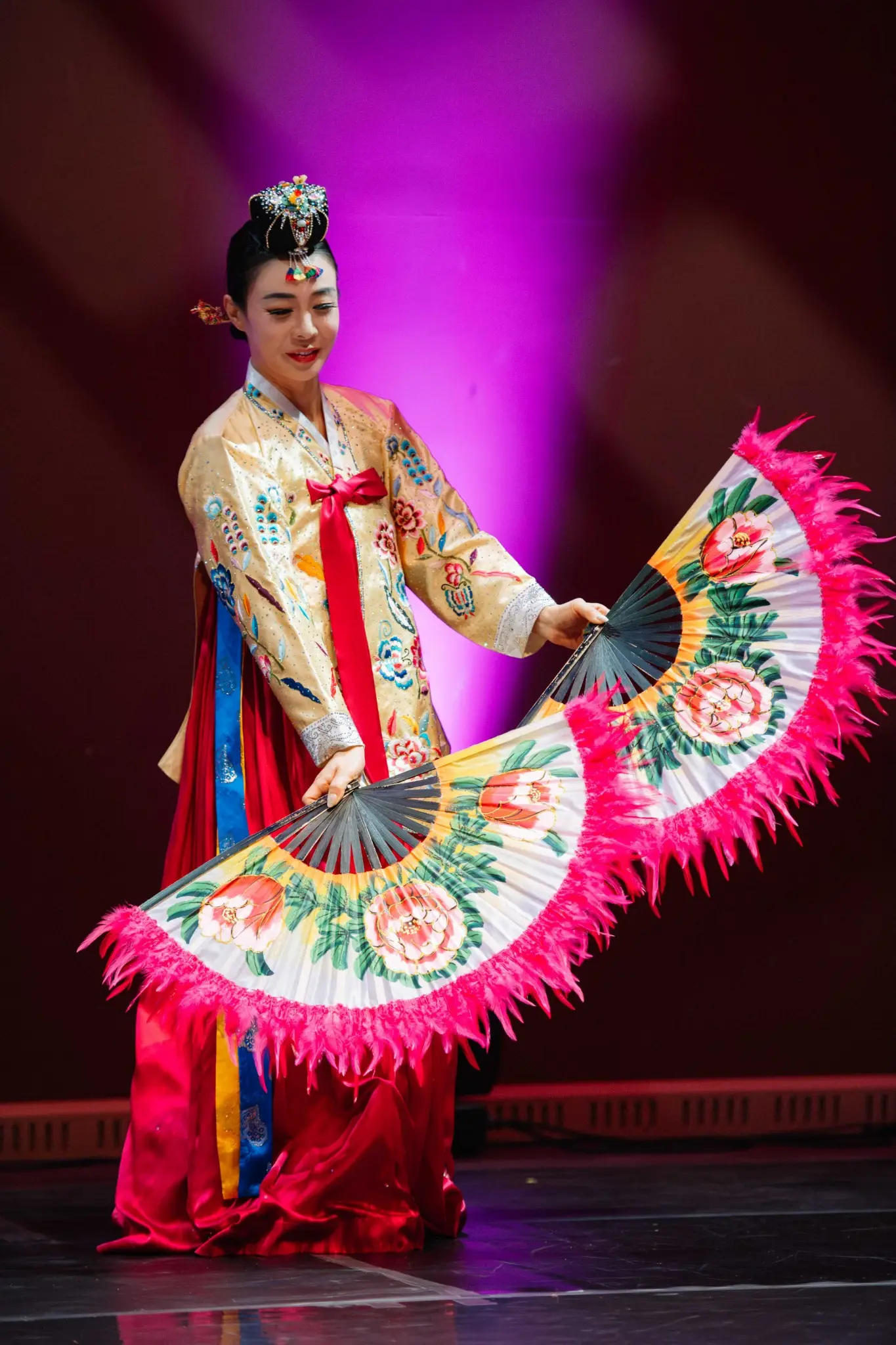
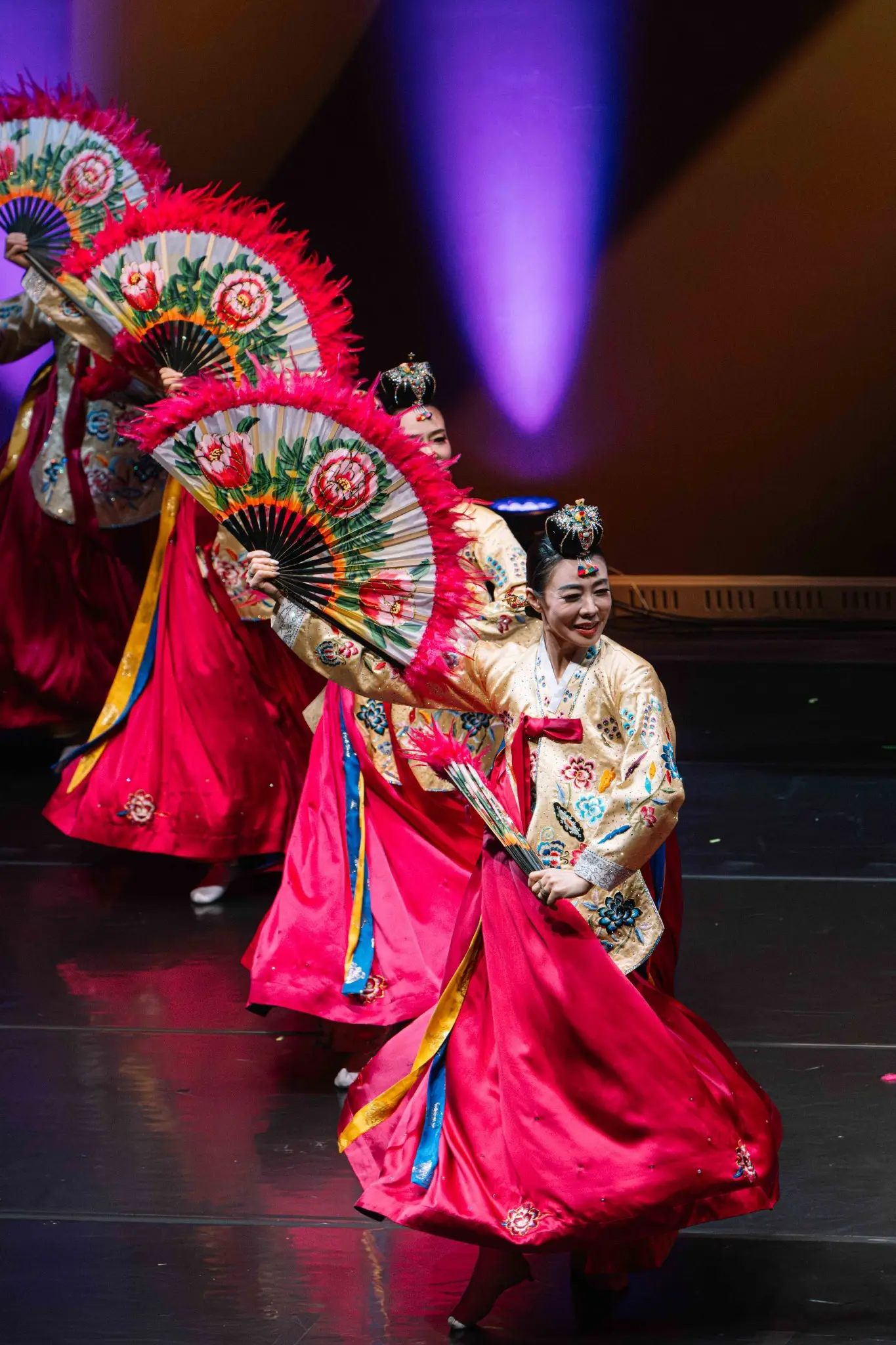
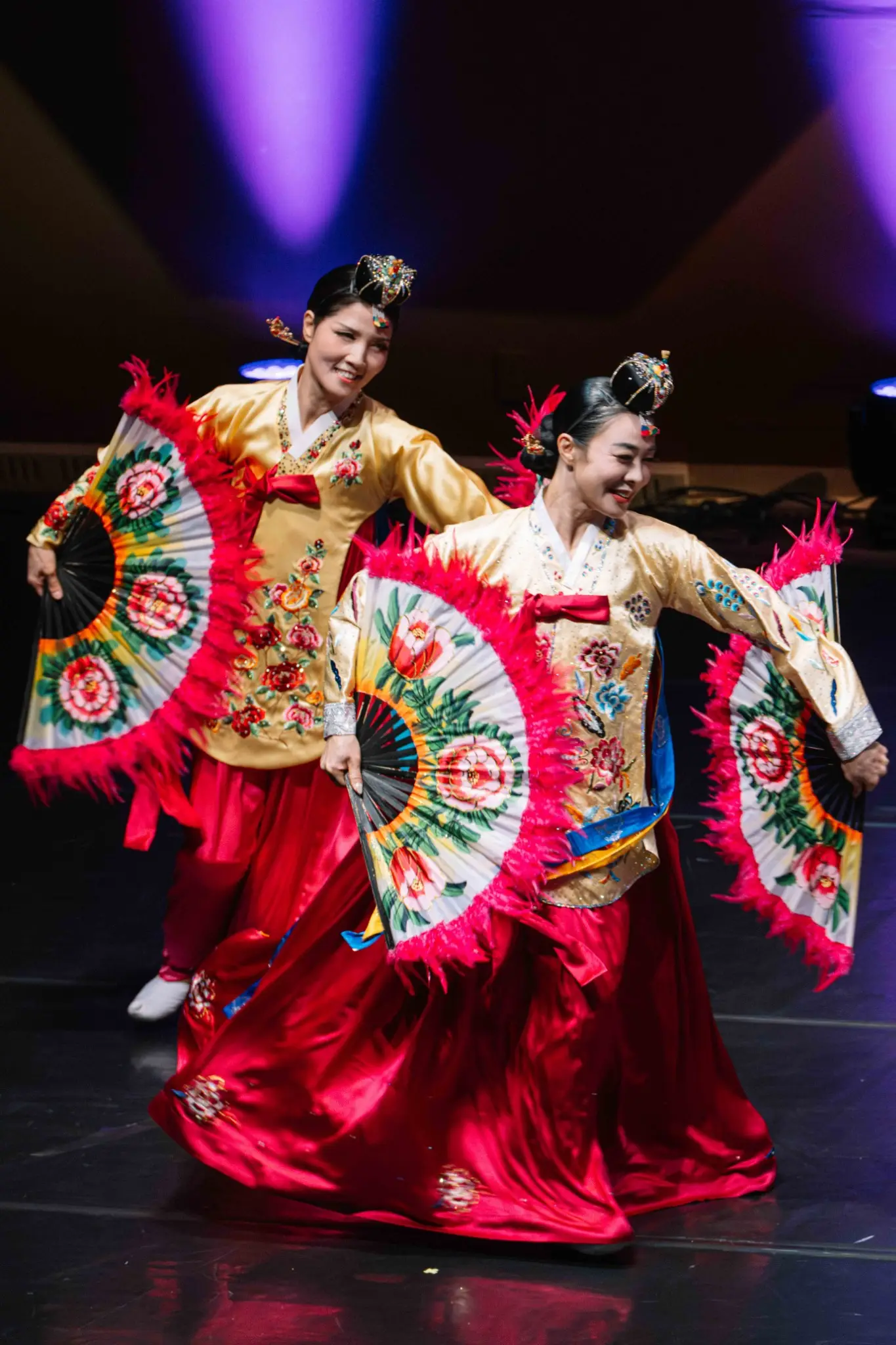
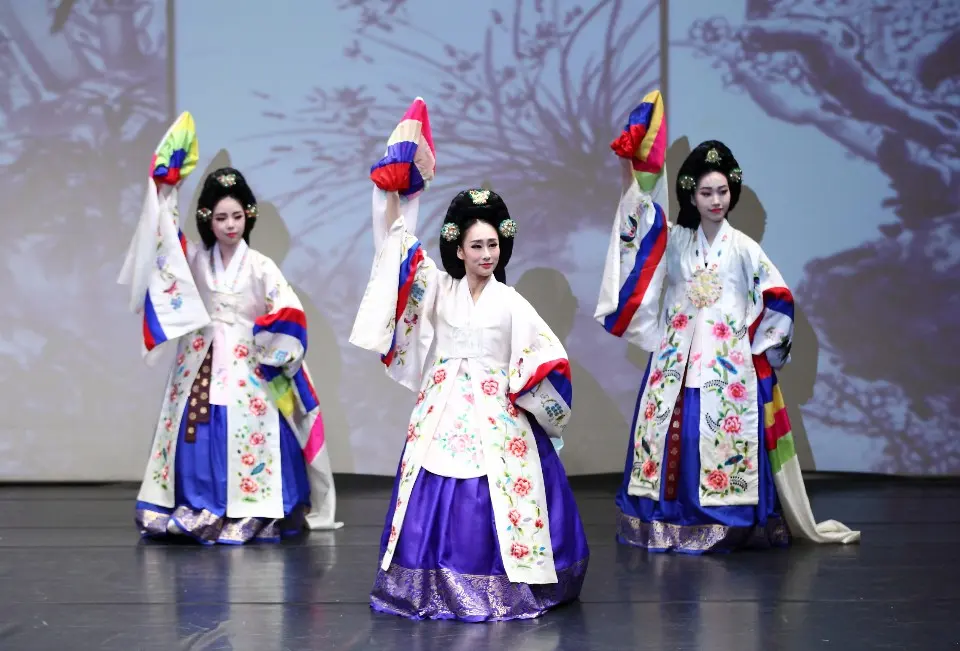
Buchaechum (Fan Dance)

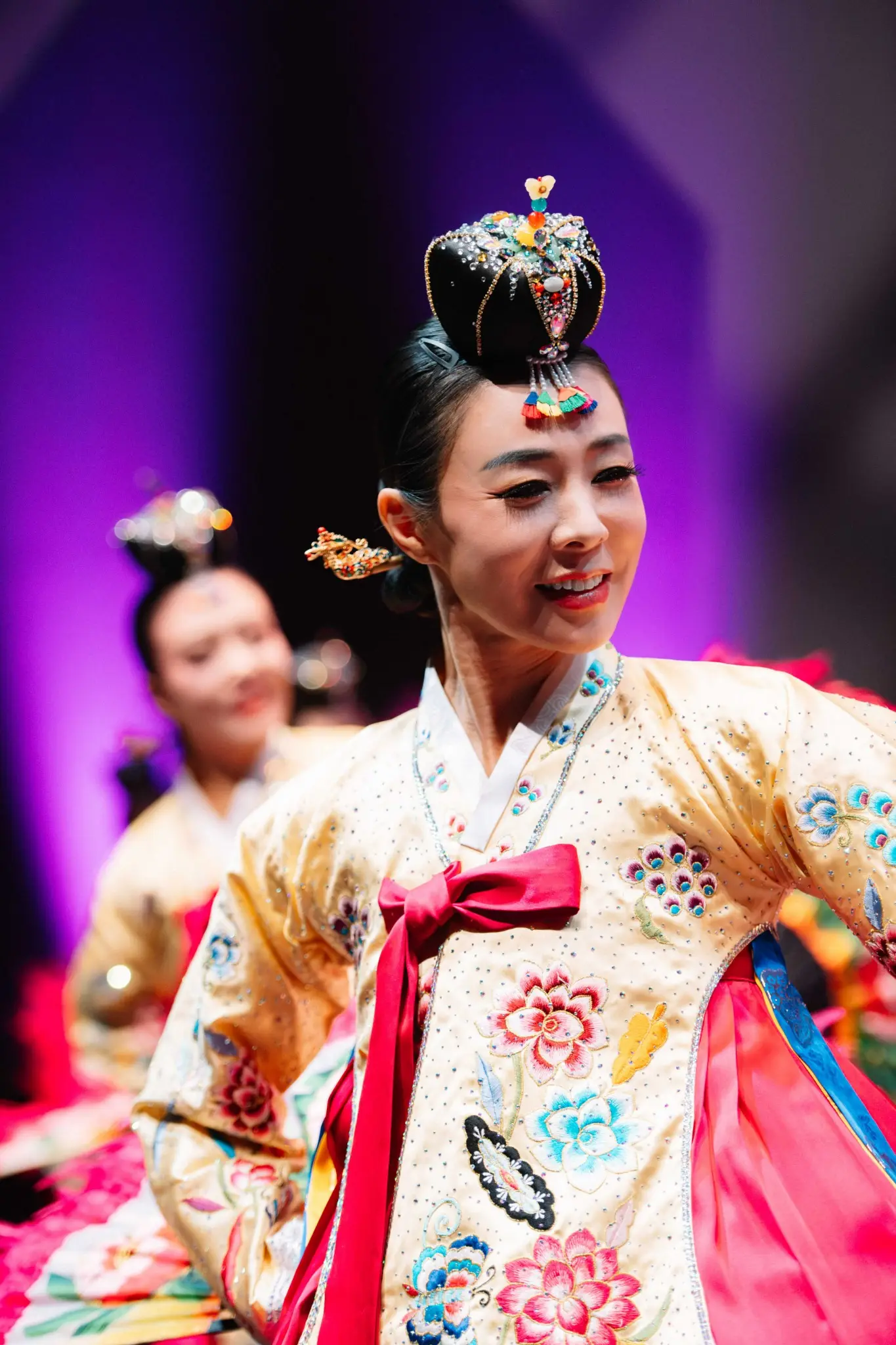
A representative Korean new-traditional dance. Dancers wear richly decorated jokduri headpieces, jeogori in a dangui style, and deep-pink skirts, holding ornate flower fans while moving to gutgeori and jajinmori rhythms of Changbu-taryeong.

Its beauty lies in the friction sound of opening and closing fans, the arcs created by the fans, the curves of the costumes, the extended lines of the arms, and the fans spinning through the air.

장고춤 공연 사진

Janggochum

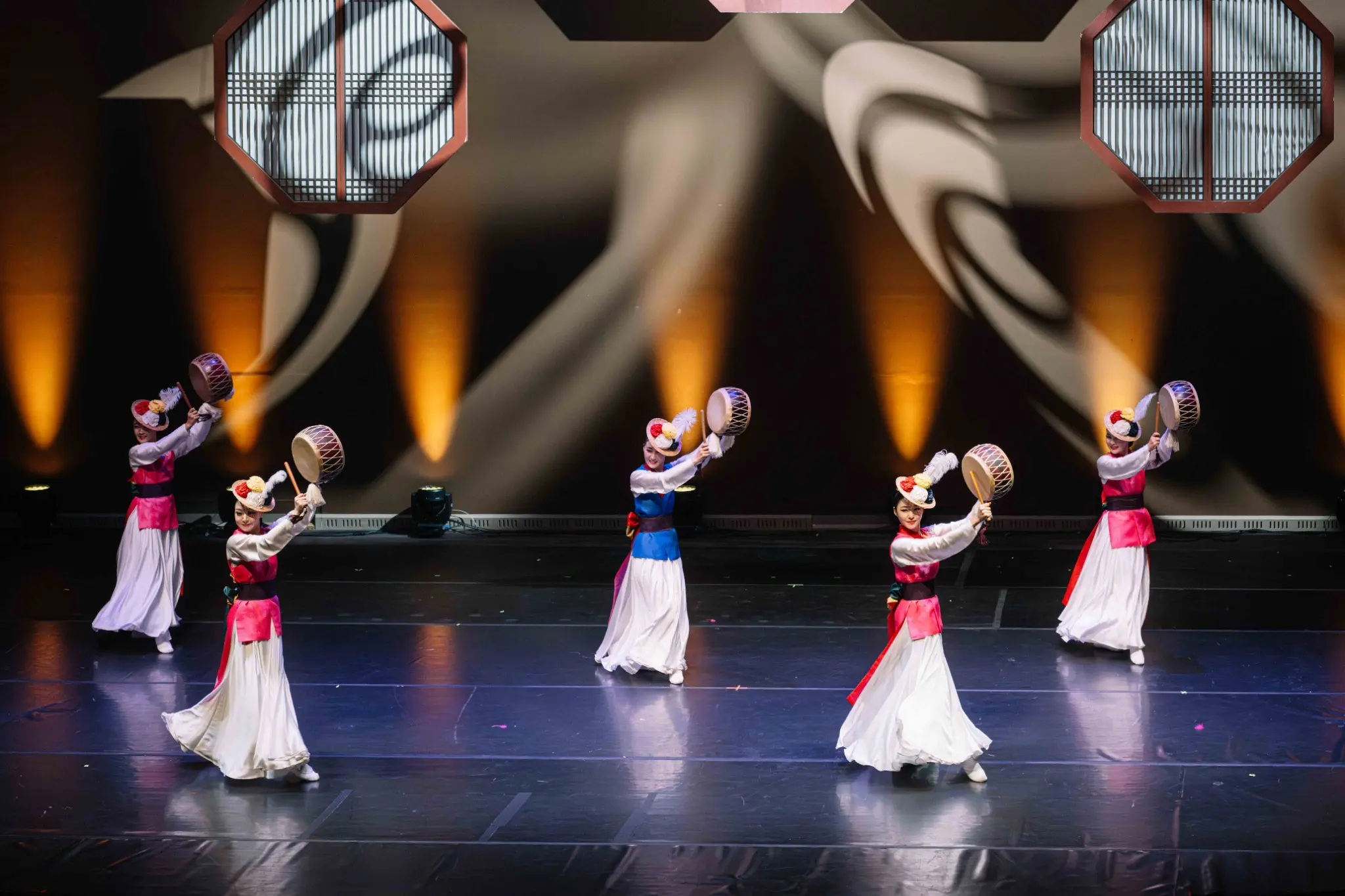
A dance derived from the rhythms and movements of seol-janggo performance in traditional nongak.

Beyond the excitement and sinmyeong of nongak, Janggochum is characterized by varied footwork, supple hand movements, dance phrases, and finely differentiated janggo rhythms.

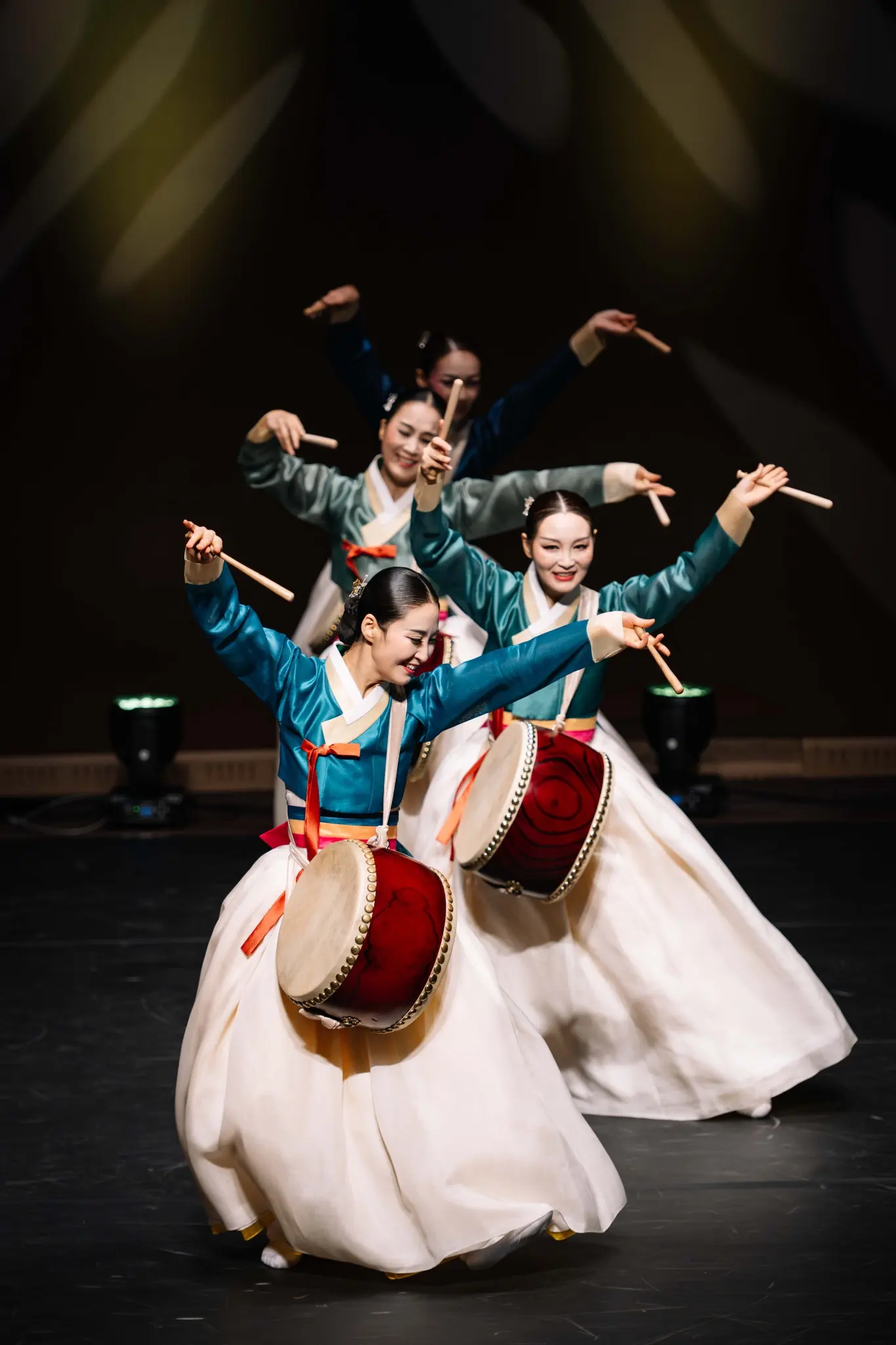
진도북춤 공연 사진

Jindo Bukchum

Originally danced in agrarian communities to lift the spirits of workers, this stage work develops the indigenous drum play handed down in Jindo.

It moves through jajinmori, gutgeori, dongsalpuri, hoseong and other rhythmic cycles. Unlike many regional drum dances, it uses two drumsticks and intricate rhythmic playing, producing a highly detailed, virtuosic and exhilarating dance.

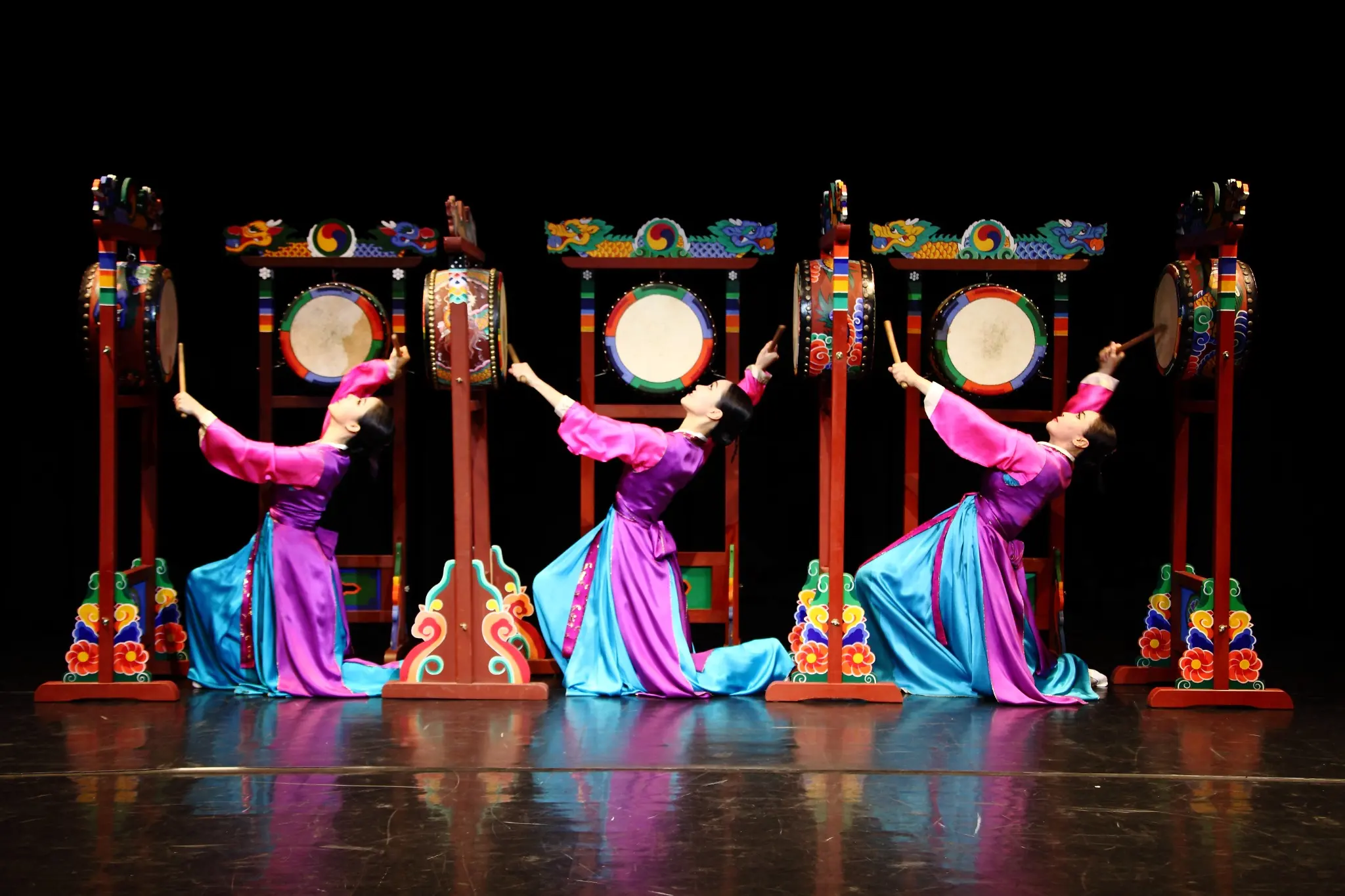
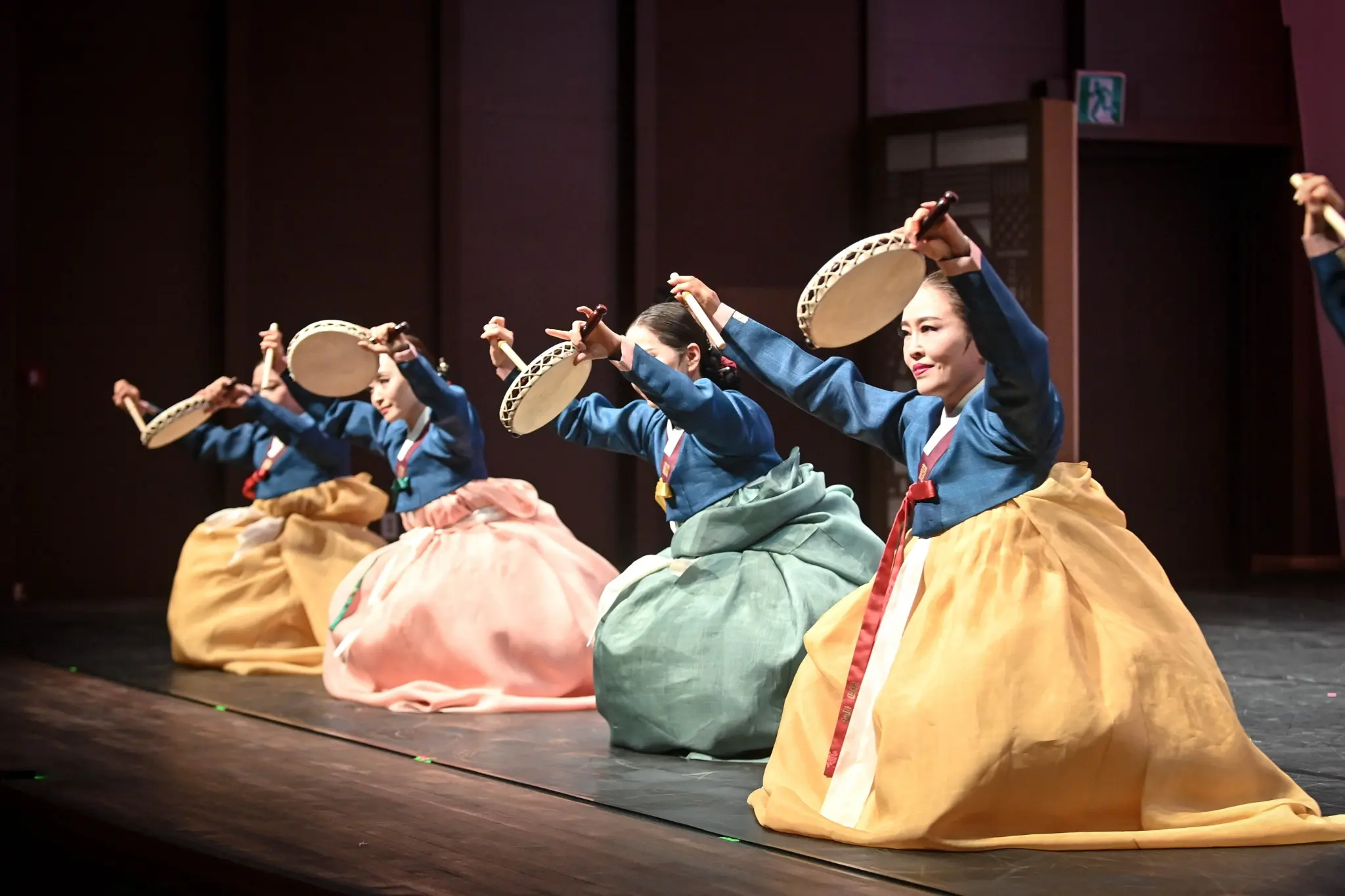
삼북춤 공연 사진

Sambukchum

Sambukchum is a classical dance built around three drums. Beginning with a slower jajinmori pulse, it gradually intensifies toward hwimori, combining many changes of striking technique with dynamic movement. The result is brilliant and highly virtuosic.

풍류가인 공연 사진

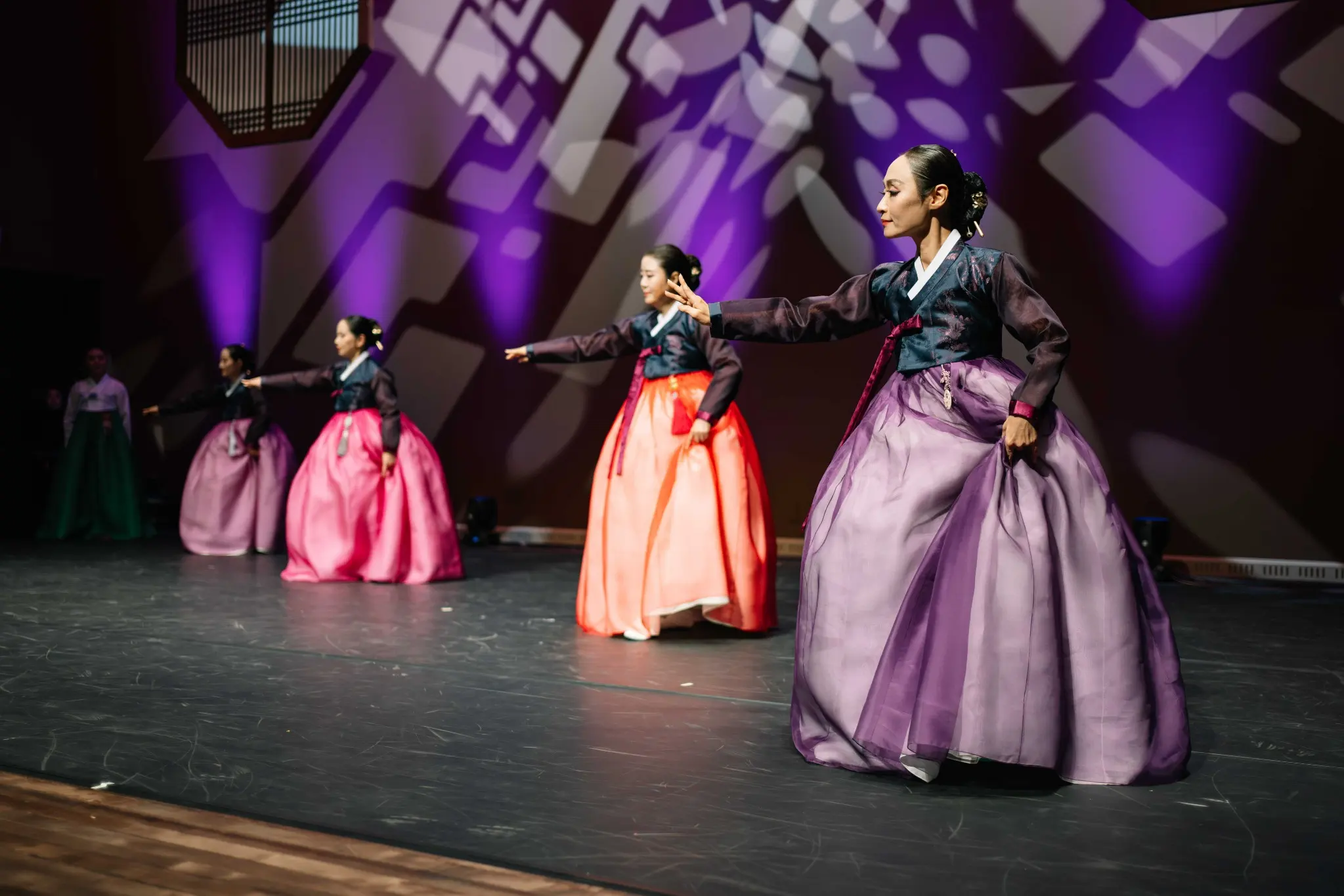
Pungnyu Gain

Pungnyu Gain uses fans and traditional movement to create a calm yet persistent, delicate and wistful flow. The dance contains refined technique and a graceful feminine charm.

한량무 공연 사진

Hallyangmu (Sapungjeonggam)

Hallyangmu portrays the inner world of cultivated seonbi who understand pungnyu and spontaneously immerse themselves in jeong, meot and heung. It is marked by masculine dignity, elegance and highly refined movement.

버꾸춤 공연 사진

Beokkuchum

This dance was staged by Master Seo Han-u from a form of nongak play once practiced on Geumdangdo Island in Wando, Jeollanam-do.

Based on the pangut rhythms of Jeolla Udo Nongak, breath and movement are layered over varied and brilliant rhythmic patterns to form colorful and beautiful dance phrases.

A strap is attached to the beokku and looped around the wrist; the dancer strikes, spins and tosses the drum while dancing.

살풀이춤 공연 사진

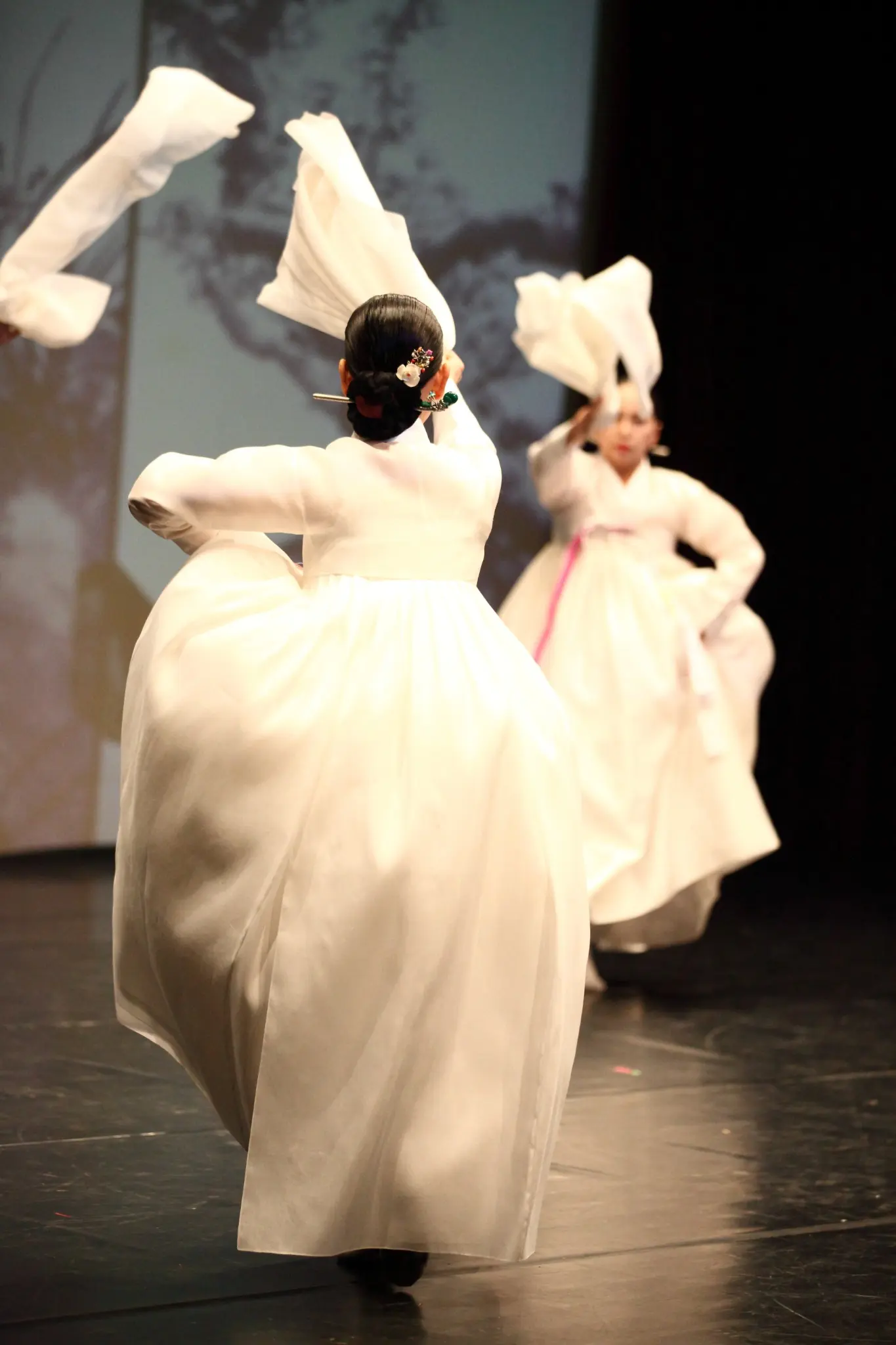
Salpurichum

Salpurichum is a highly refined dance influenced by the gisaeng arts of Honam. Through disciplined movement it reveals the heart, transmitting the beauty of feminine line with great subtlety.
Its virtuosity emerges through changing strength and softness. The emotional core is deep han, yet the dance does not remain in sorrow; it transforms grief into joy and sinmyeong, expressing a layered human emotional world.

태평무 강선영류 공연 사진

Taepyeongmu (Kang Sun-young Style)

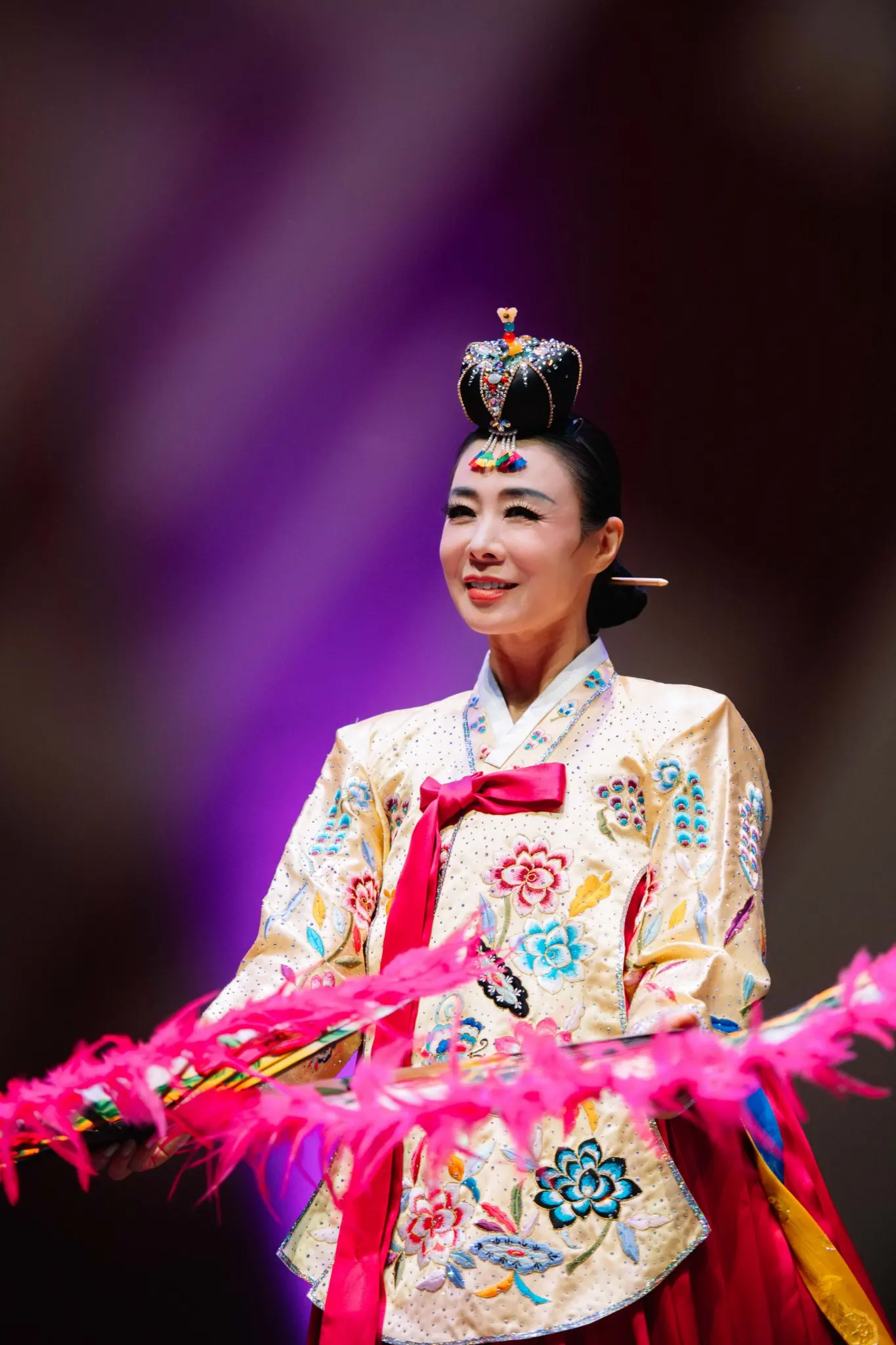
National Intangible Heritage No. 92, Taepyeongmu prays for peace and prosperity. Dressed as a queen, the dancer embodies the grandeur and splendor of courtly style.
Rhythms such as jinsoe, nakgung, teobeollim and dosalpuri make the structure more complex than many other dances. Rapid rhythmic changes and intricate footwork remain brilliant yet controlled.

태평무 한영숙류 공연 사진

Taepyeongmu (Han Young-sook Style)

This version also expresses a wish for national peace and prosperity. The music is gentle yet dignified, while restrained footwork and inner elegance evoke the composure of a queen.

The opening adds the gayageum piece Saegarakbyeolgok, followed by rhythmic patterns such as pusal, teobeollim, bongdeungchae, ollimchae, yeongyeolchae, cheondungchae, gyeopmachigi, dosalpuri and jajin-gutgeori, gradually heightening the energy.

무아소고춤 공연 사진

Mua Sogochum (Gokkal Sogochum)

In nongak, sogo dance is broadly divided into chaesang-sogo play and gokkal-sogo dance.

The Bok Seong-su style presented here transforms movements such as kkuribuk, eotbuk, mulpugi, saekgyeongbogi and jaegibuk into expressive dance phrases. Jajinmori, jjeokjjeogi, gutgeori (pungnyeongut), dongsalpuri and hwimori rhythms, together with kkwaenggwari, jing, janggo, buk and taepyeongso, release abundant meot and heung.

무아가락춤 공연 사진

Mua Garakchum

Over the lonely yet restrained melody of a daegeum solo in Cheongseonggok, the dancer carries a janggo and releases an unsettled inner world. The choreography follows the line of the body through jeong–jung–dong, placing life’s joys and sorrows into the drum. Interaction with the janggo and the dynamic rhythms of Udo seol-janggo create pure sinmyeong and a refined beauty within rustic strength.

장구춤 이매방류 공연 사진

Jangguchum (Yi Mae-bang Style)

The Yi Mae-bang Jangguchum artistically elevates rhythms and movement derived from seol-janggo dance in nongak into a new-dance lineage.

It combines the heung and sinmyeong of nongak with varied footwork, flexible hand gestures and delicately differentiated janggo rhythms. This presentation is a concise reconstruction of the Yi Mae-bang style.

달구벌 입춤 공연 사진

Dalgubeol Ipchum

Dalgubeol is an old name for Daegu meaning “green hill.” This gyobang-style dance contains the distinctive sentiment of Daegu and expresses the strength, joys and sorrows of a woman whose rough simplicity becomes a form of meot.

Beginning as a bare-handed dance, it continues as a handkerchief dance when a small cloth is drawn from the sleeve, and then into a sogo dance, giving both dancer and audience a sense of play and delight.

입춤 이매방류 공연 사진

Ipchum (Yi Mae-bang Style)

Unlike many other forms of Ipchum, the Yi Mae-bang style is performed bare-handed and is structured entirely in gutgeori rhythm to Seongjupuri music. Its refined, virtuosic, wistful and subtly sensual movements preserve the distinctive flavor of Honam gisaeng arts.

PLANNED PERFORMANCES

Planned Performances

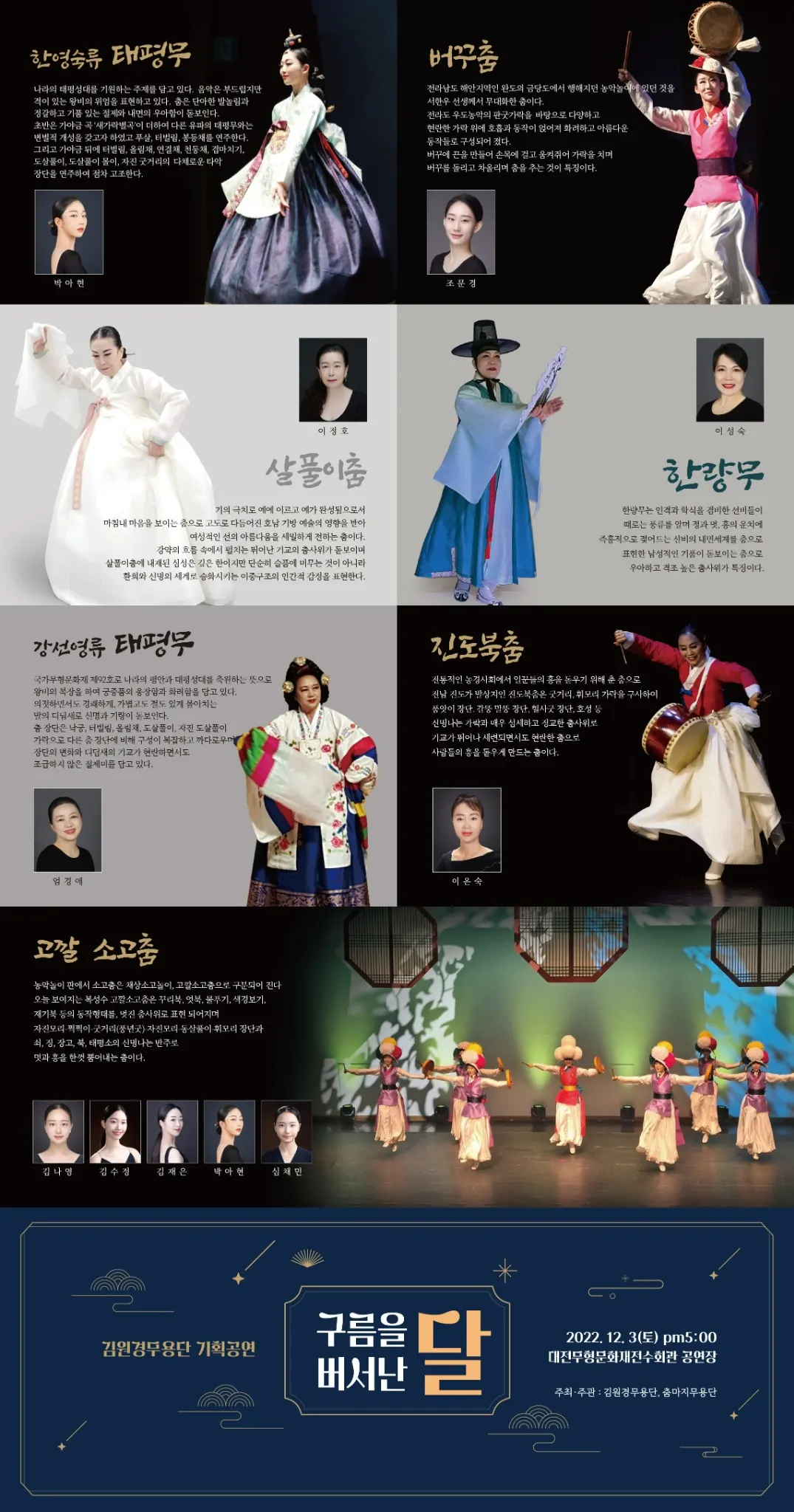
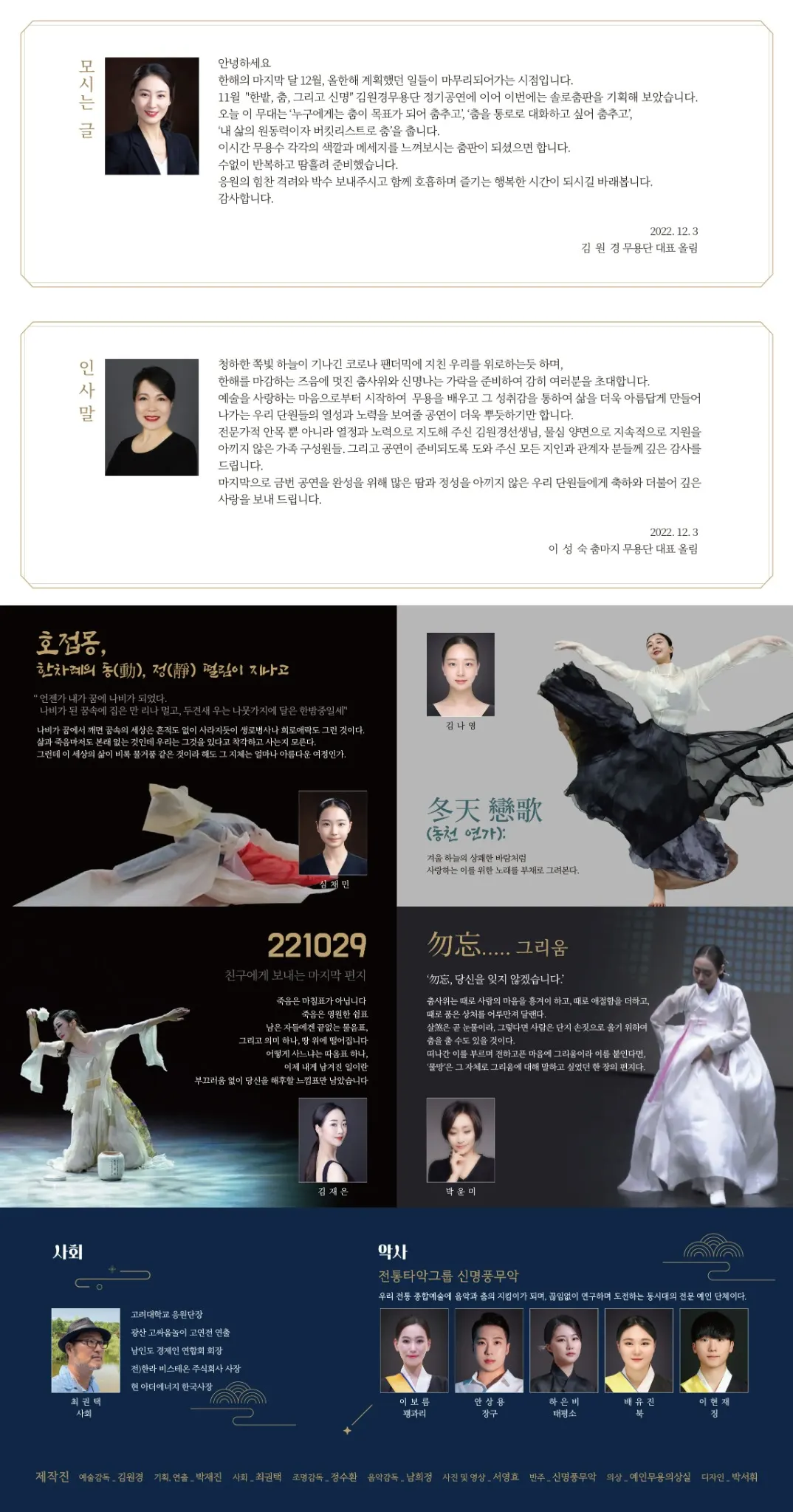
2022

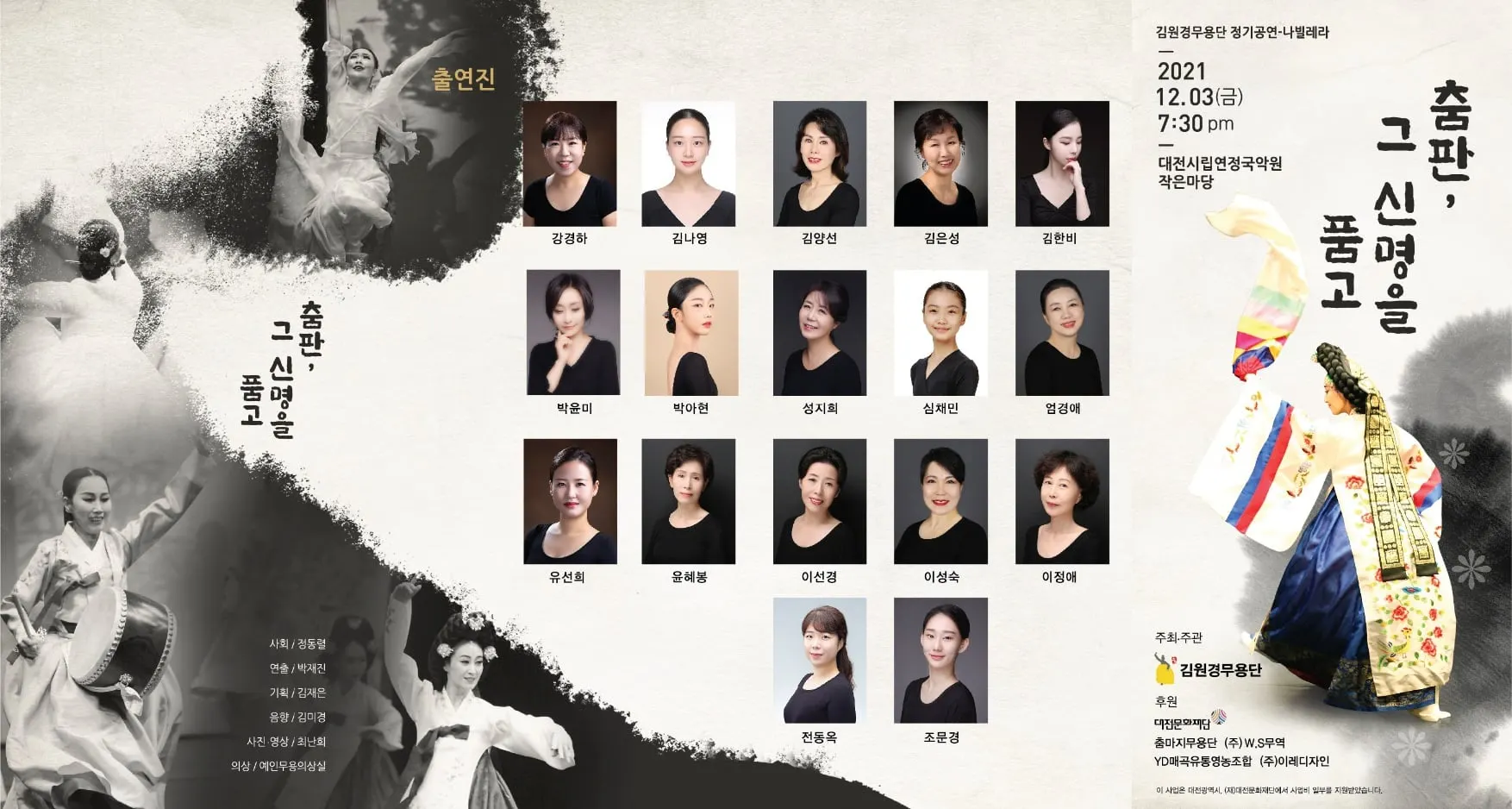
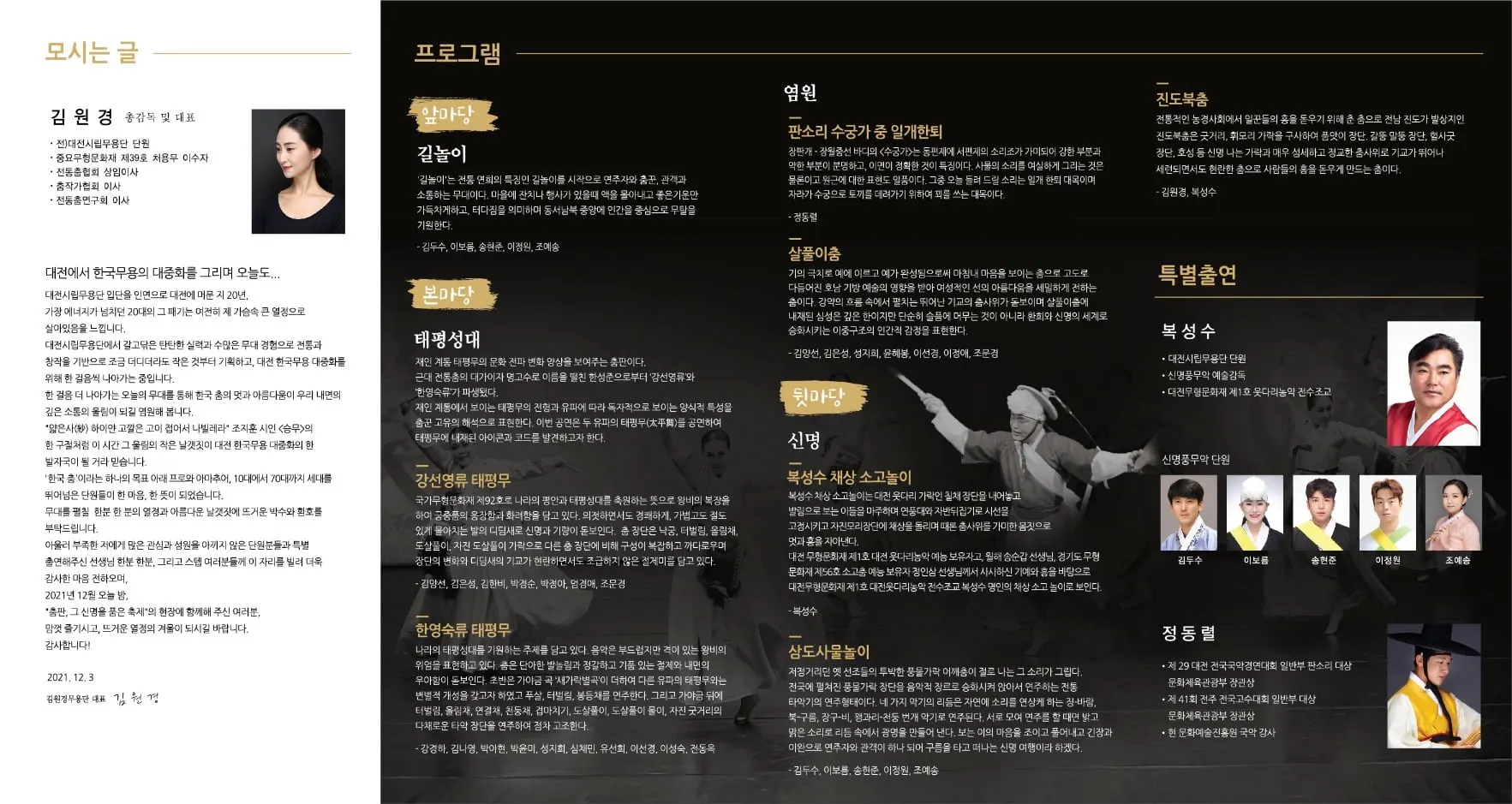
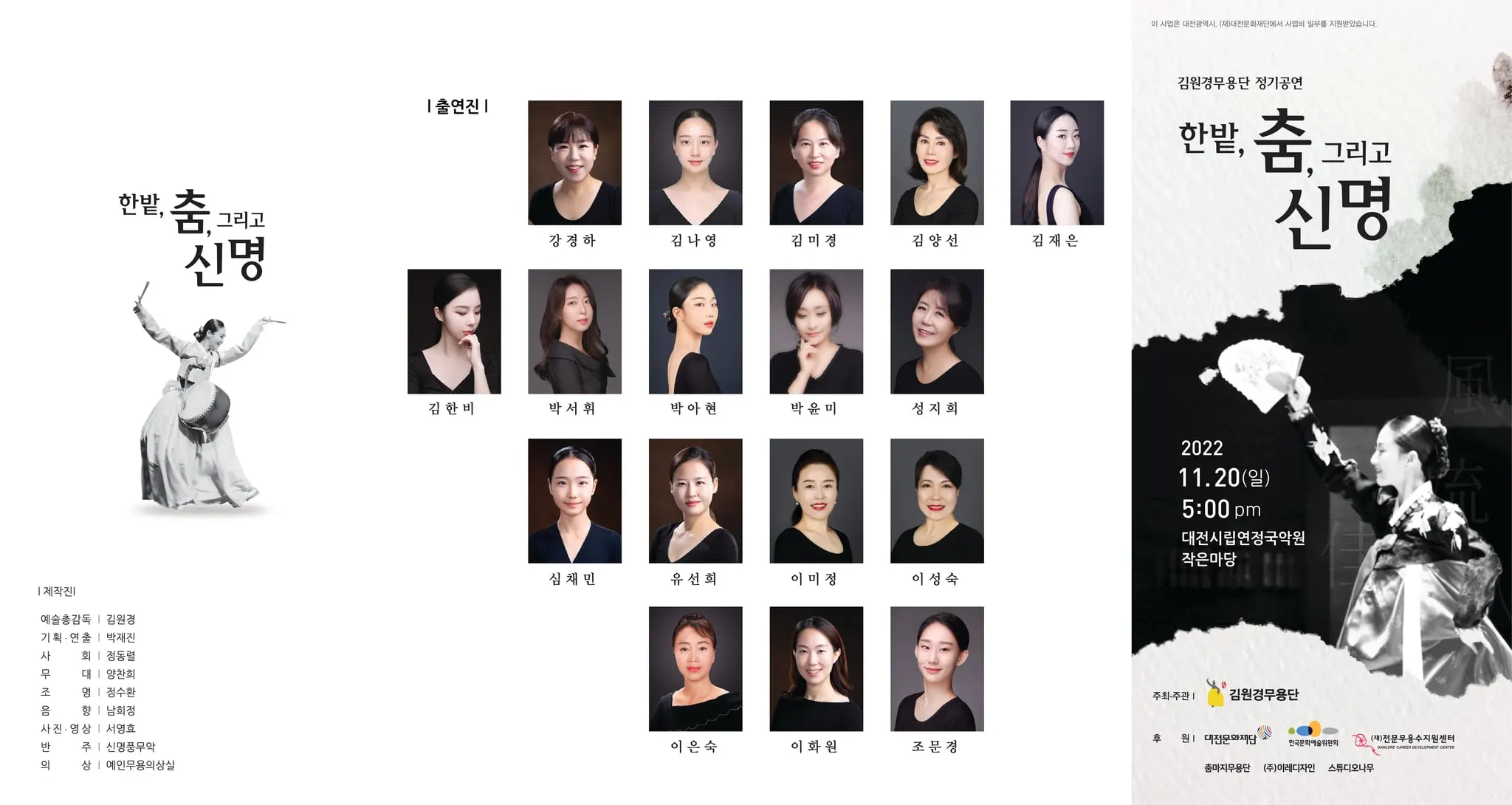
2022 기획공연 팜플렛 표지
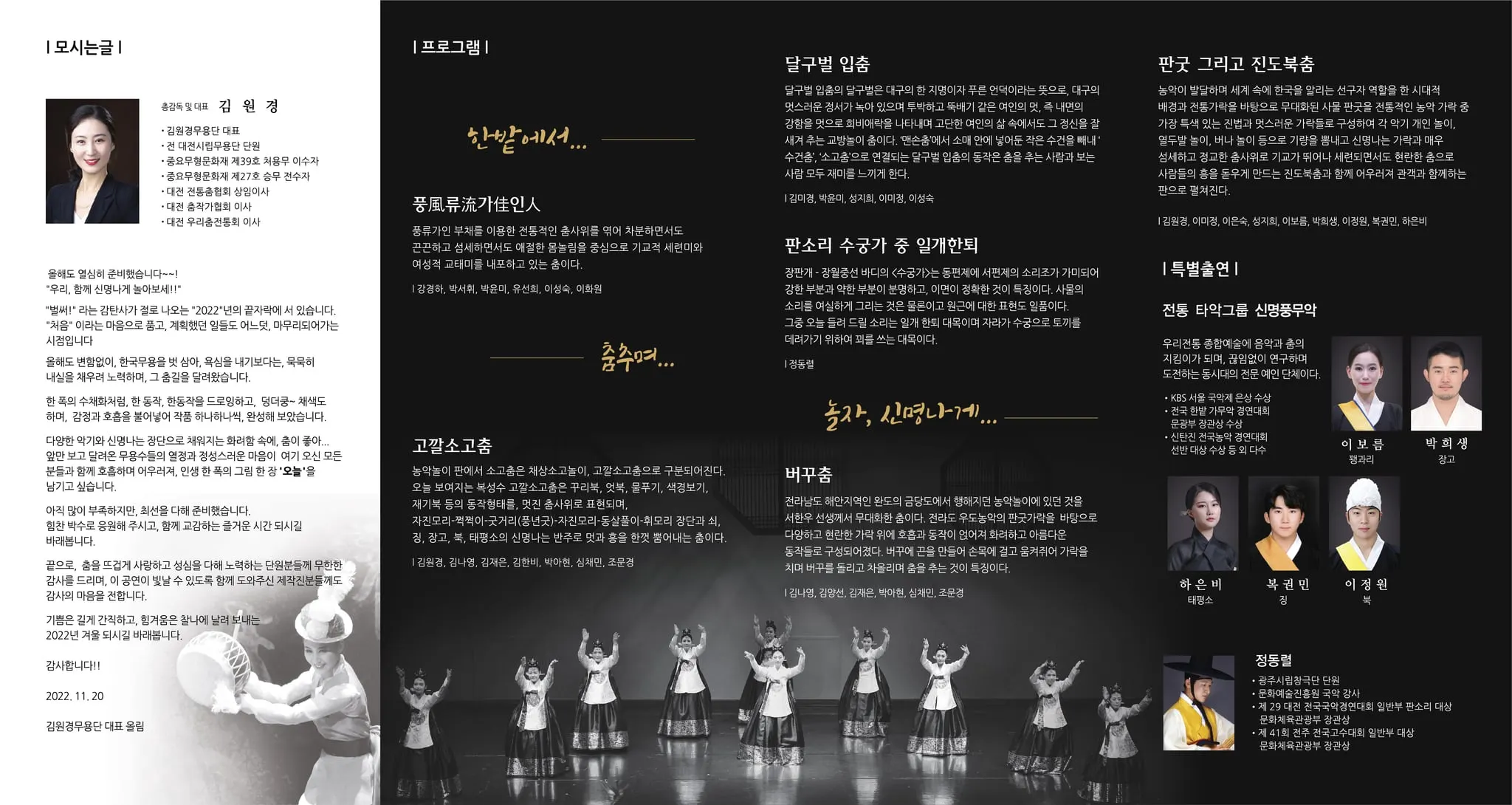
2022 기획공연 팜플렛 내지

2023

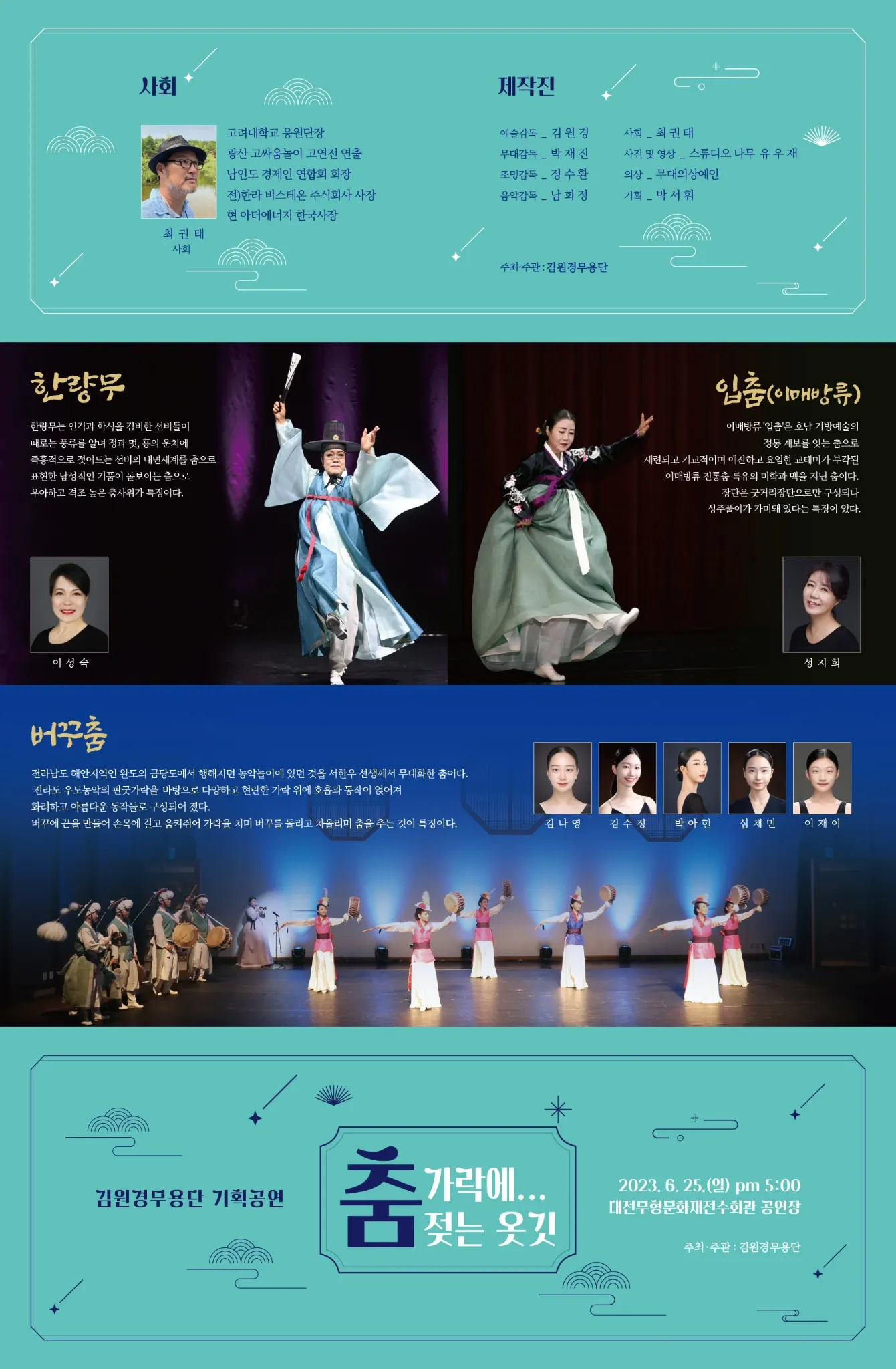
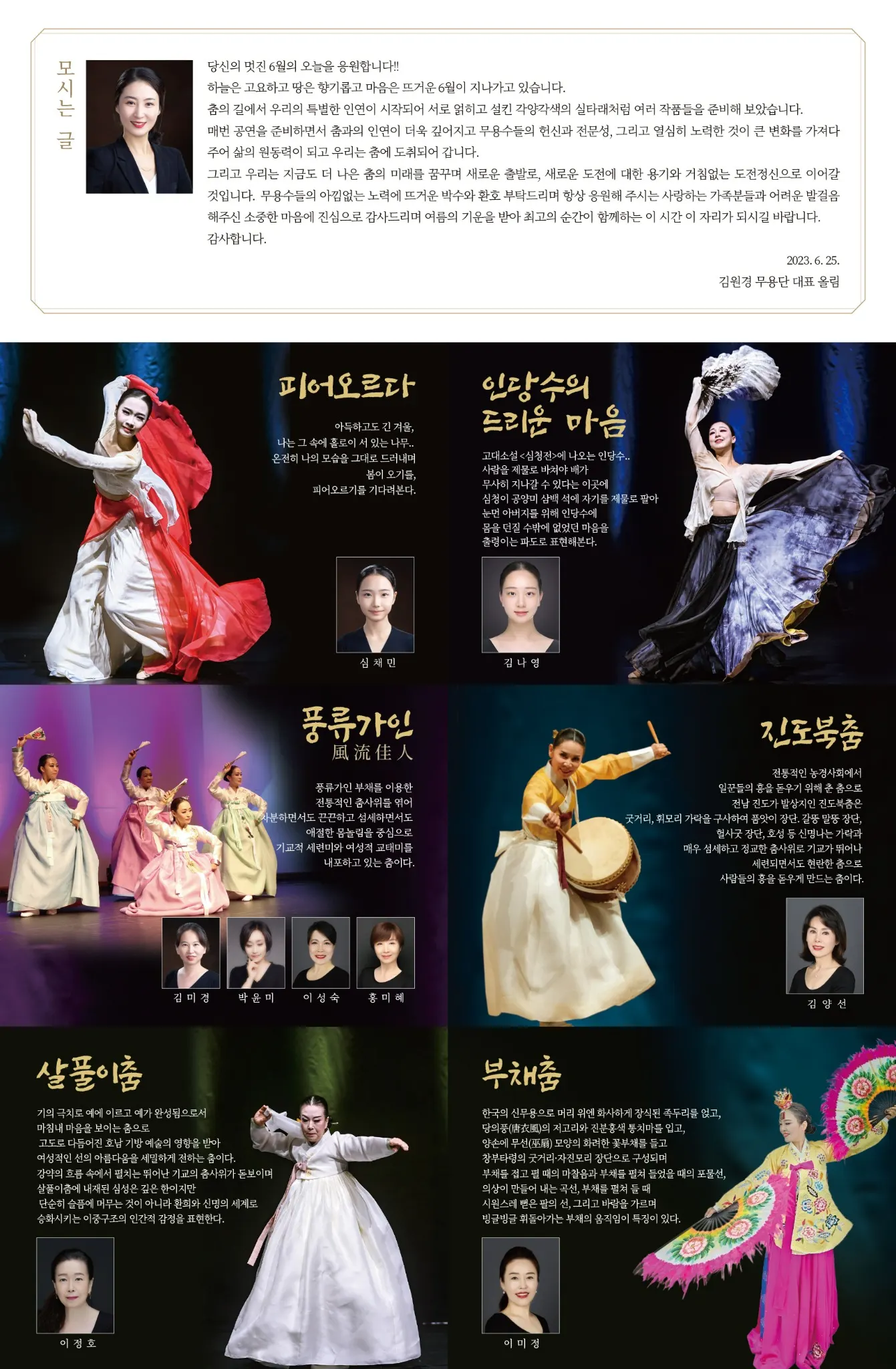
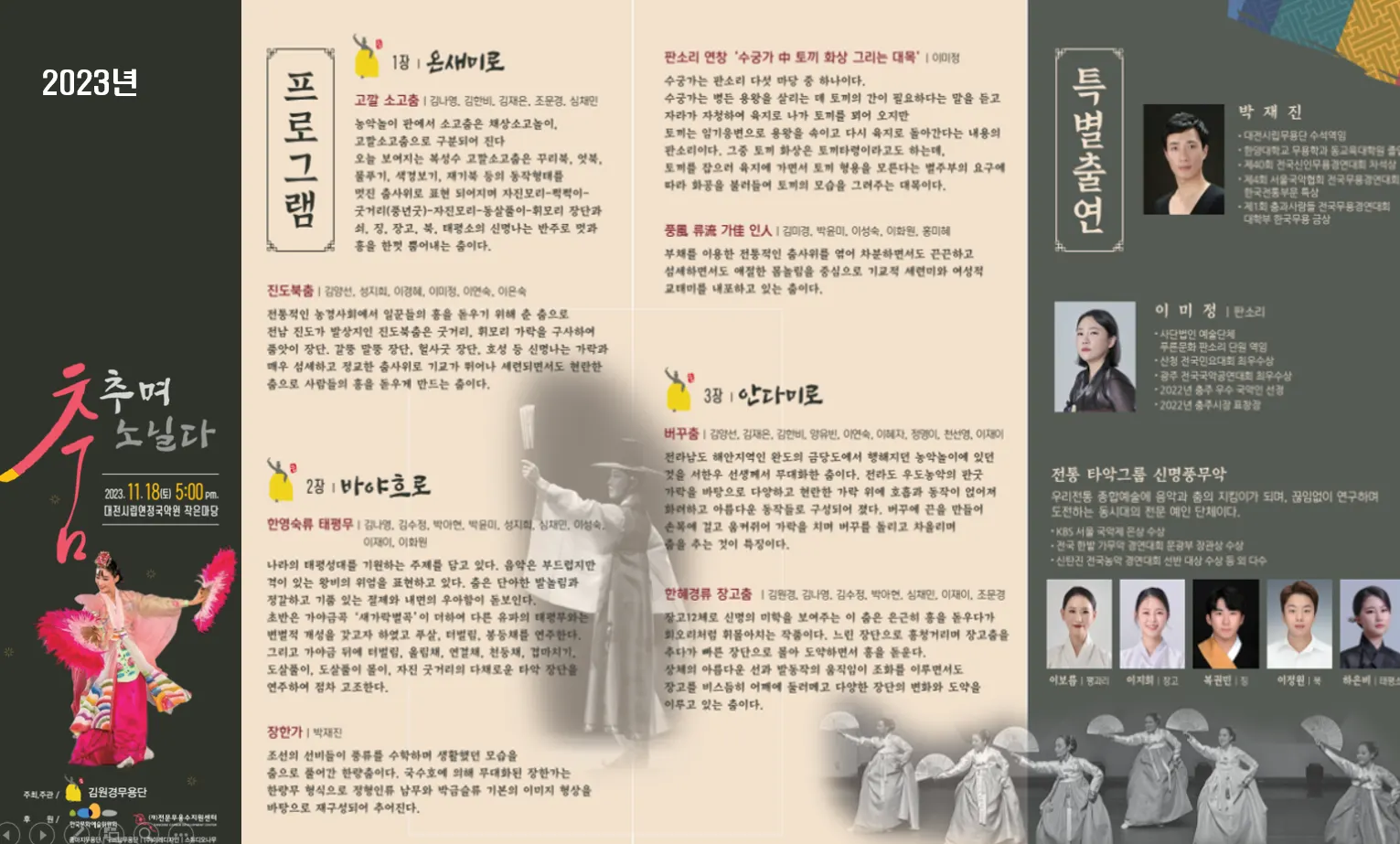
2023 기획공연 팜플렛 표지
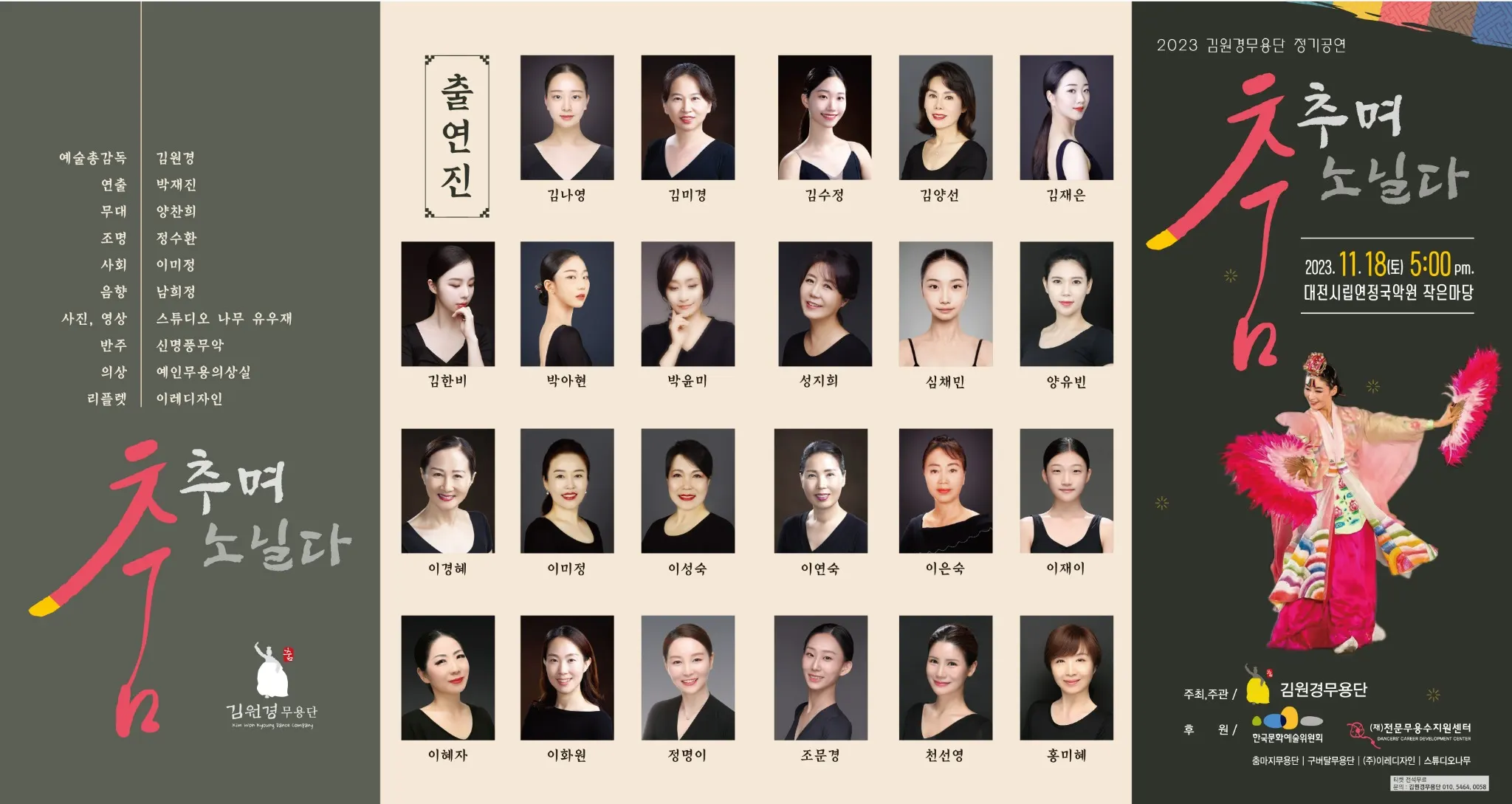
2023 기획공연 팜플렛 내지

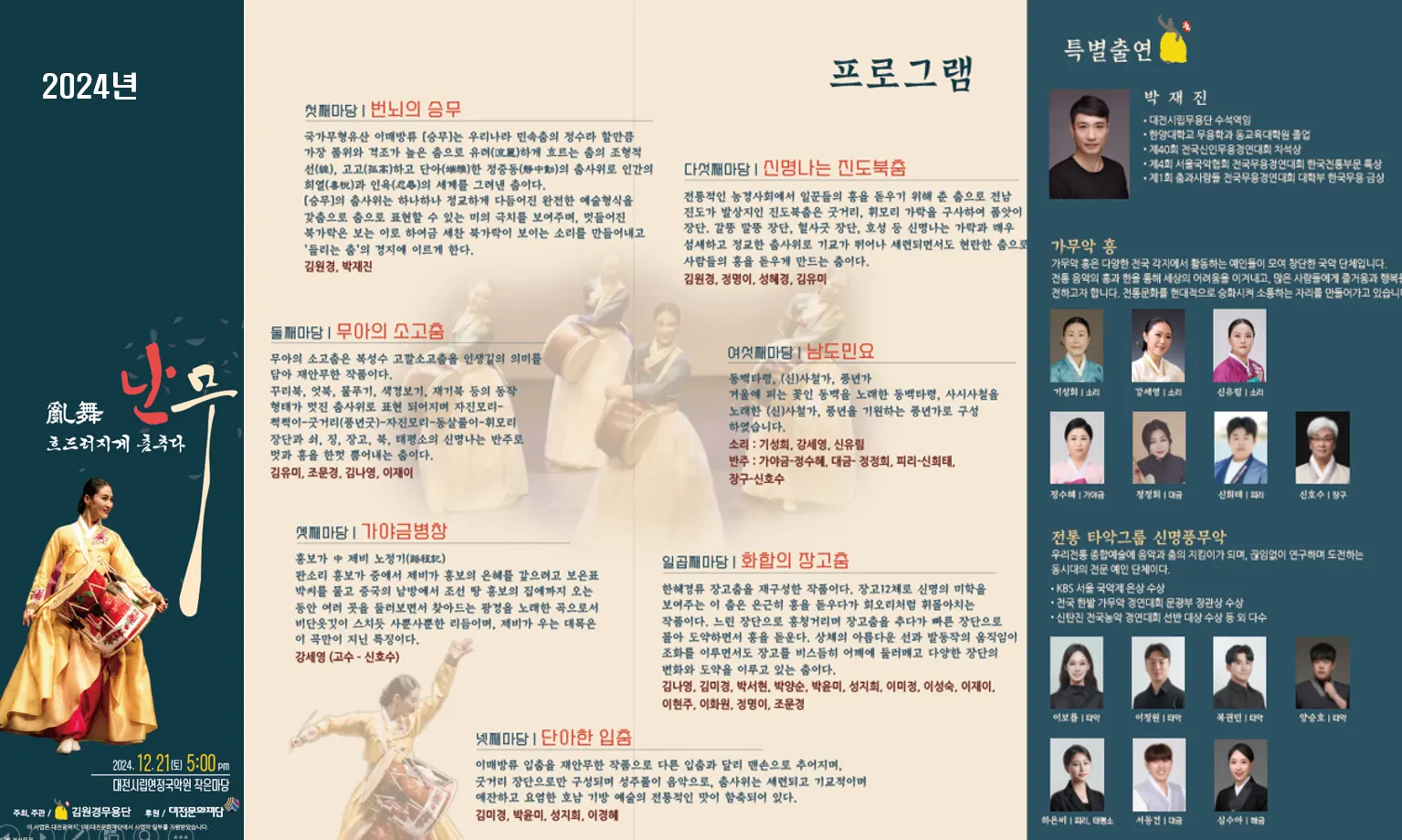
2024

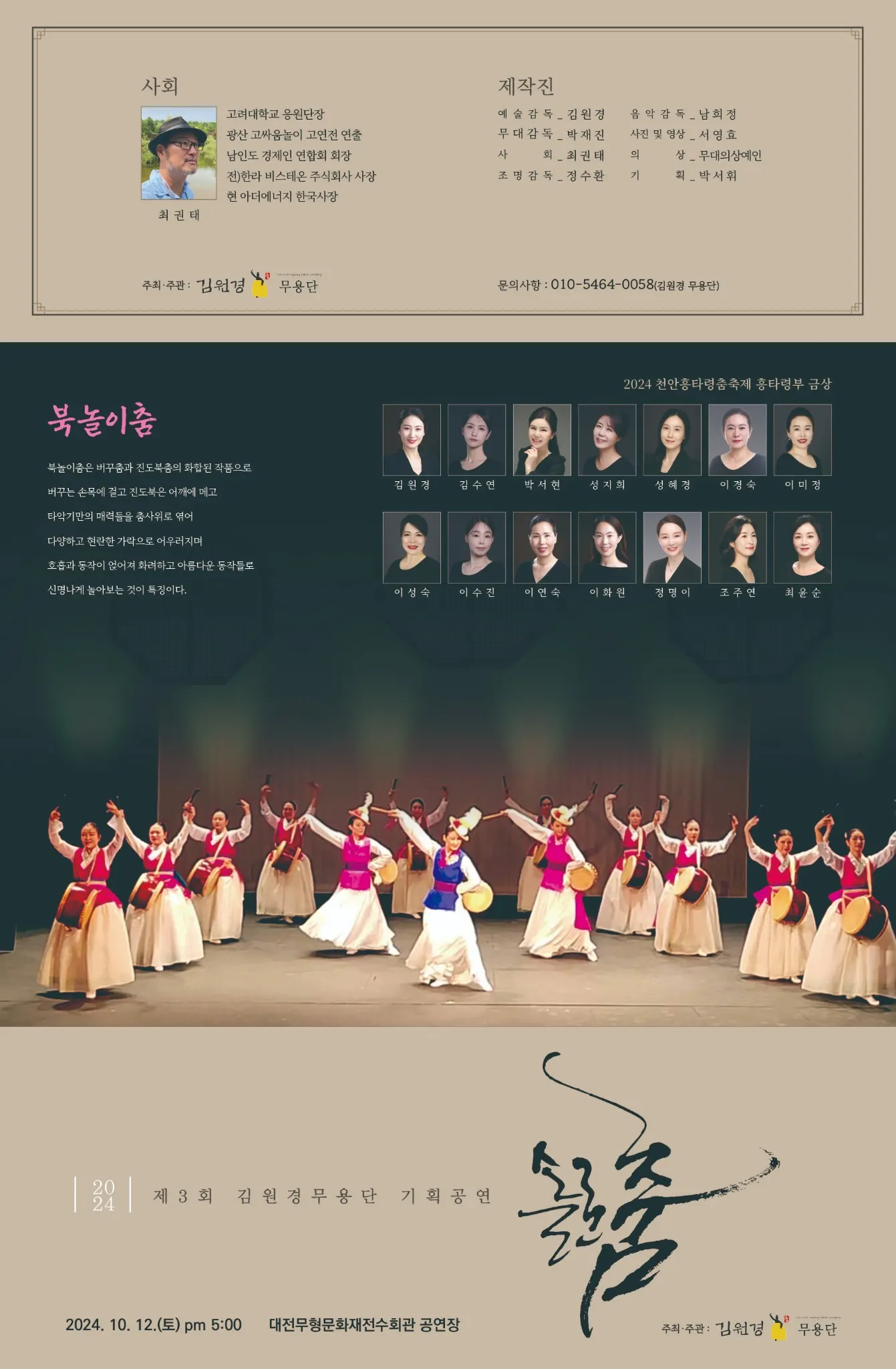
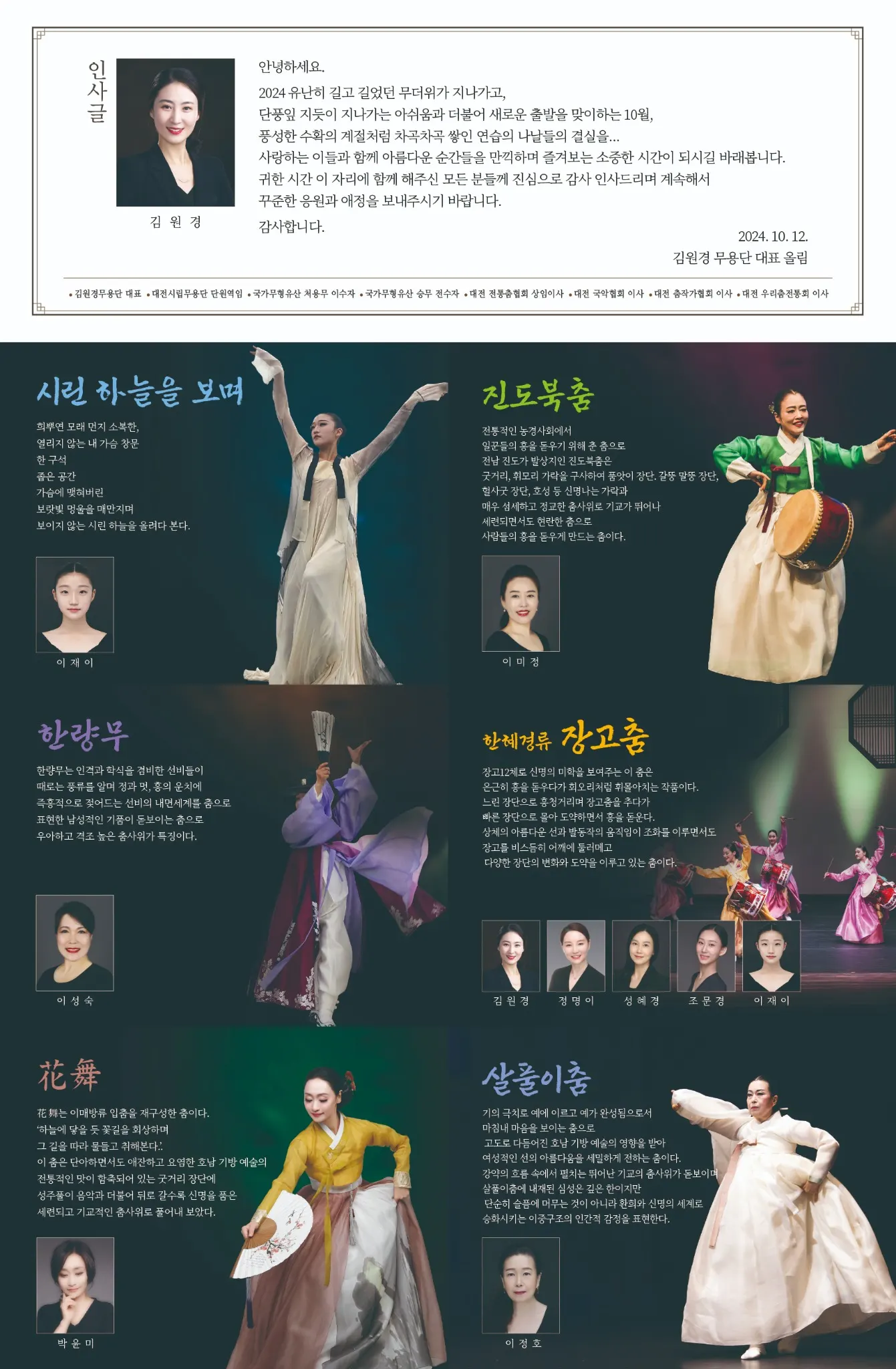
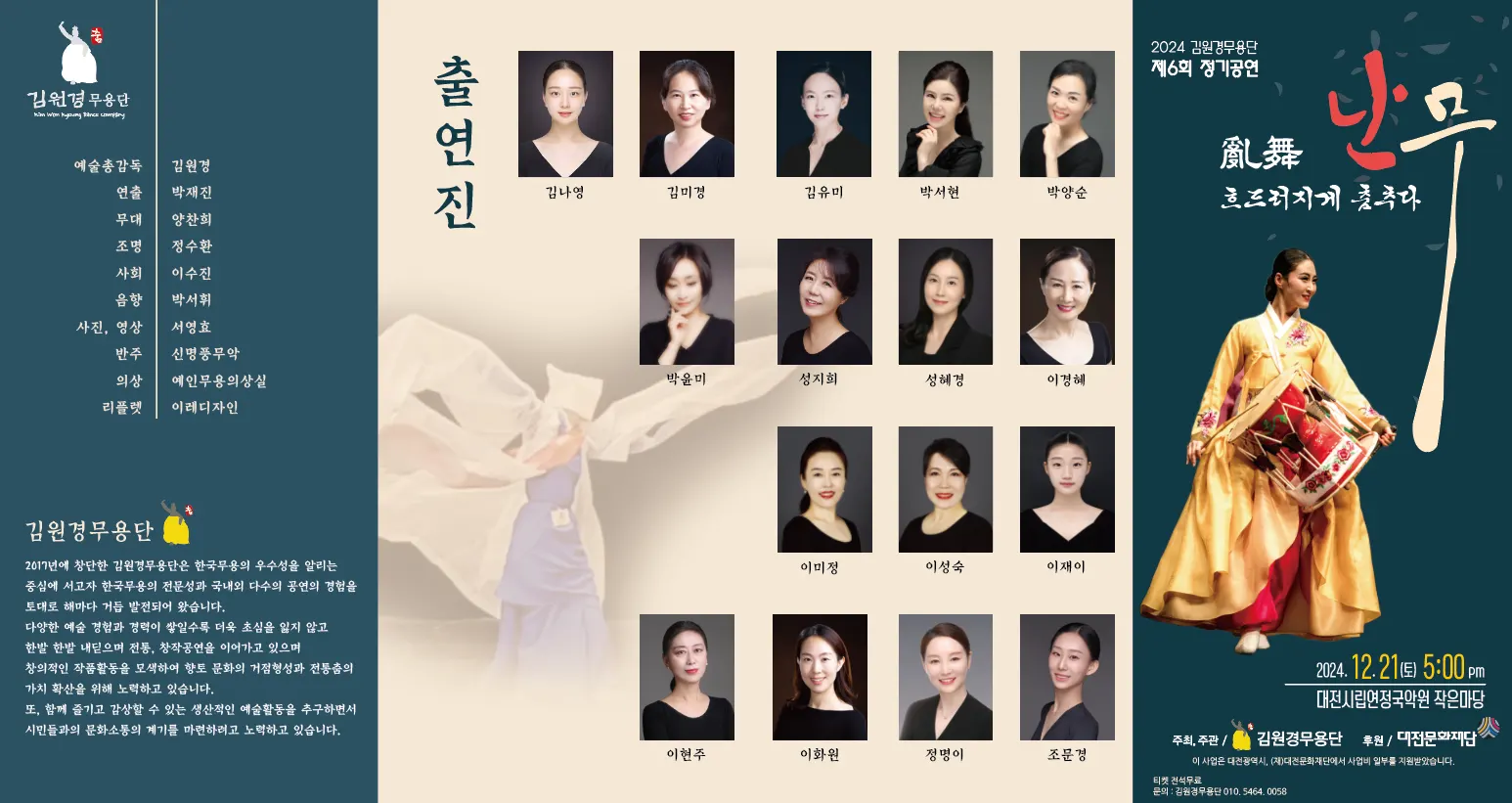
2024 기획공연 팜플렛 표지
2024 기획공연 팜플렛 내지

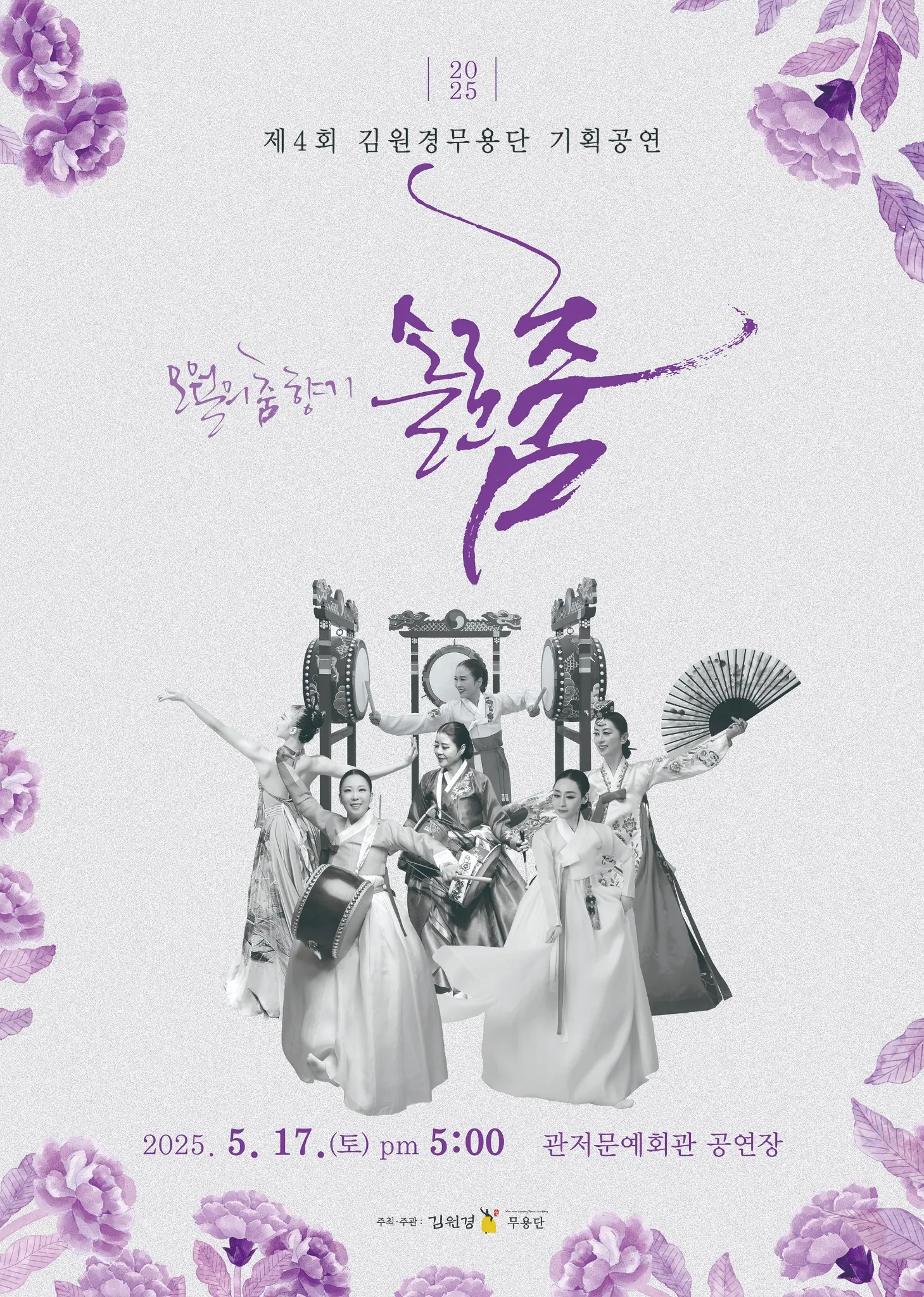
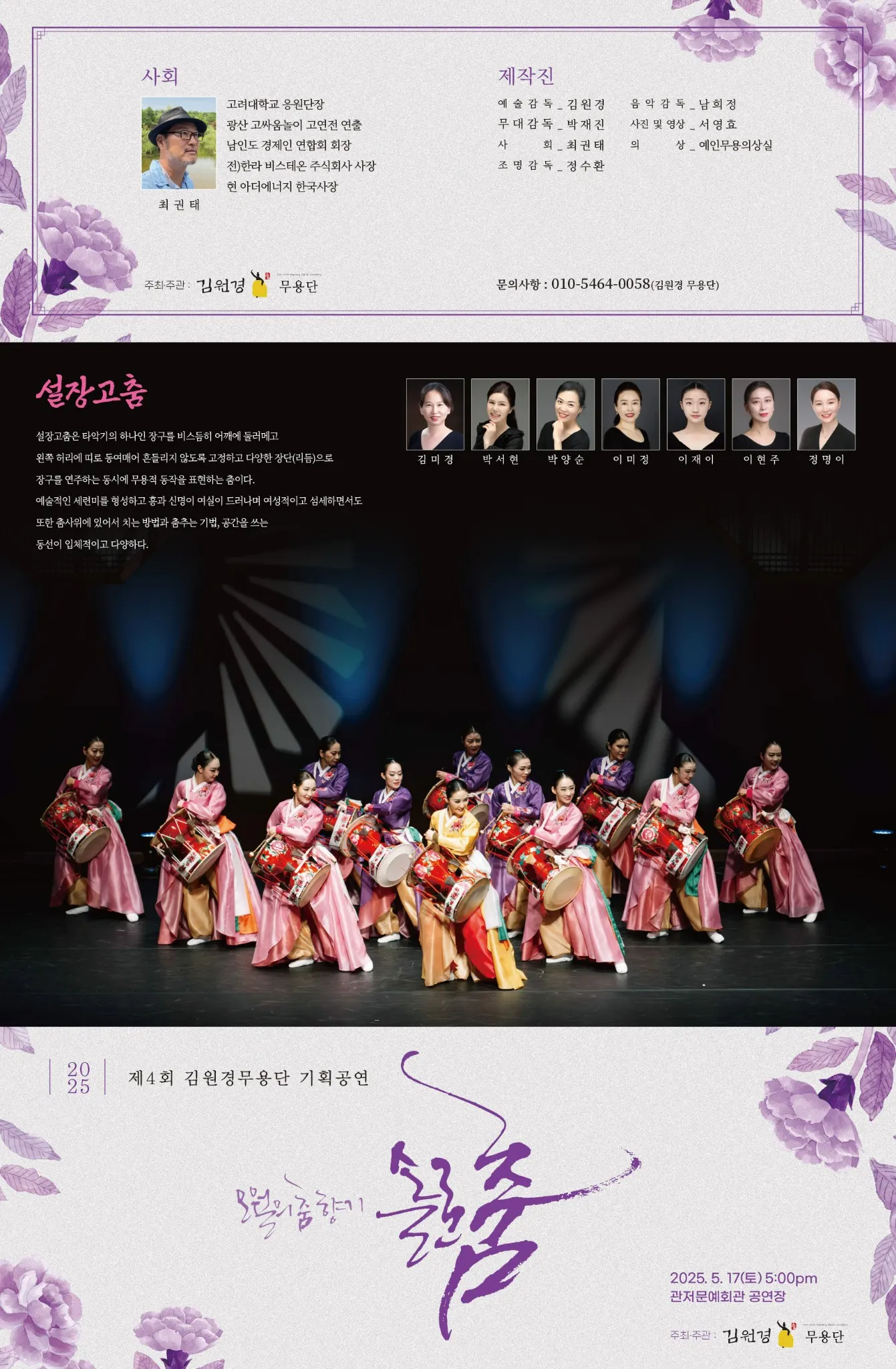
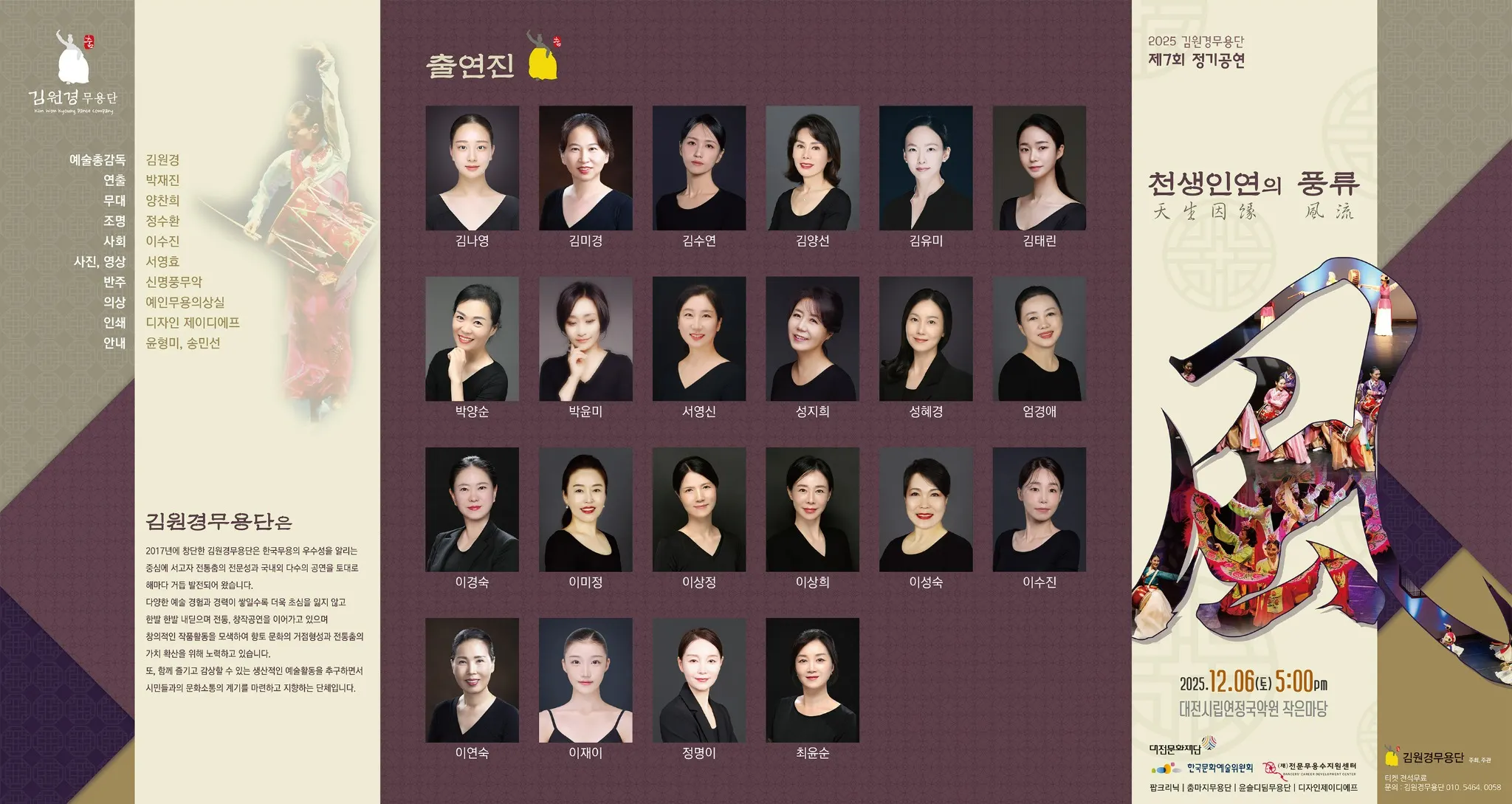
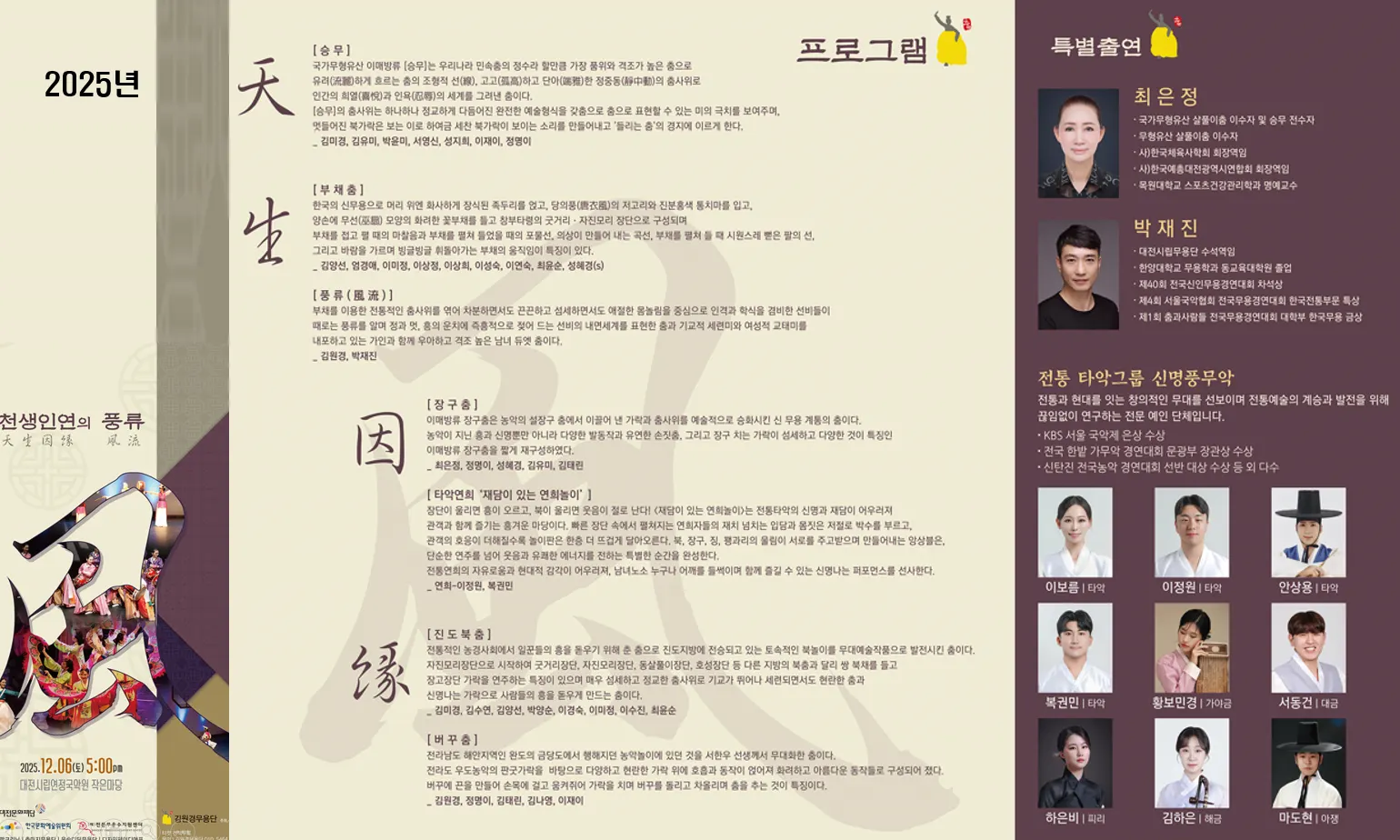
2025

2025 기획공연 팜플렛 표지
2025 기획공연 팜플렛 내지

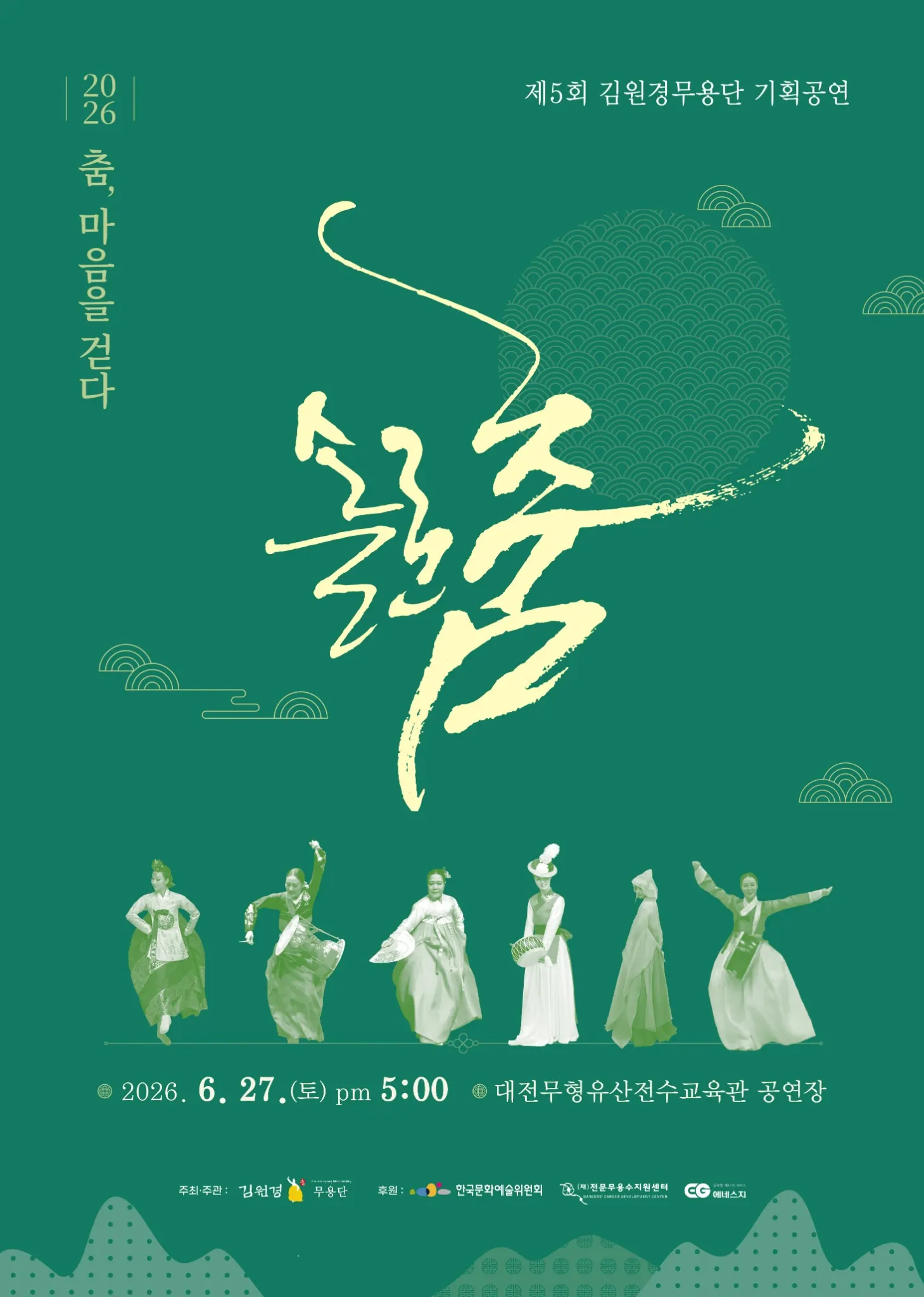
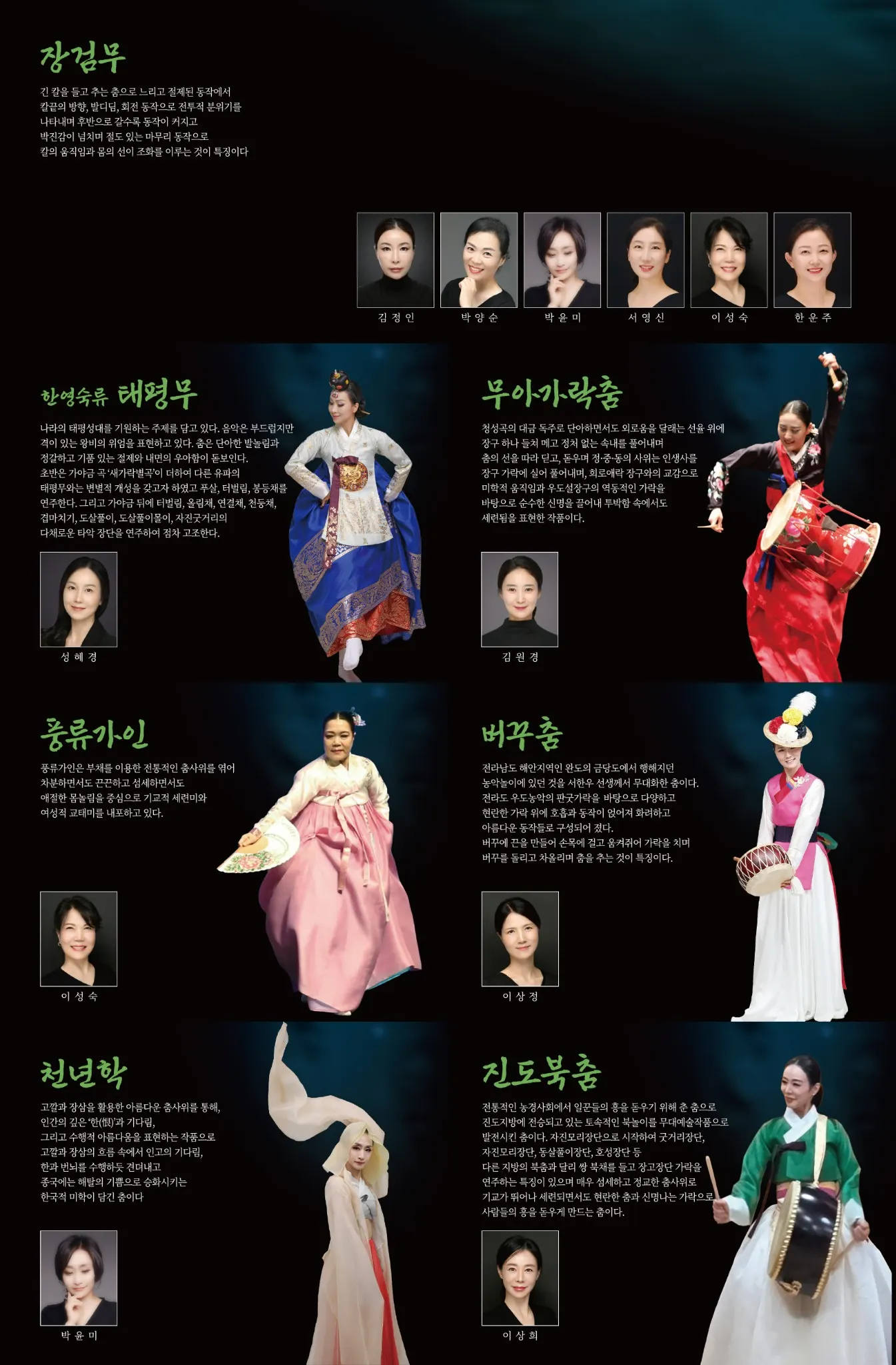
2026

2026 기획공연 팜플렛 표지
2026 기획공연 팜플렛 내지

REGULAR PERFORMANCES

Regular Performances

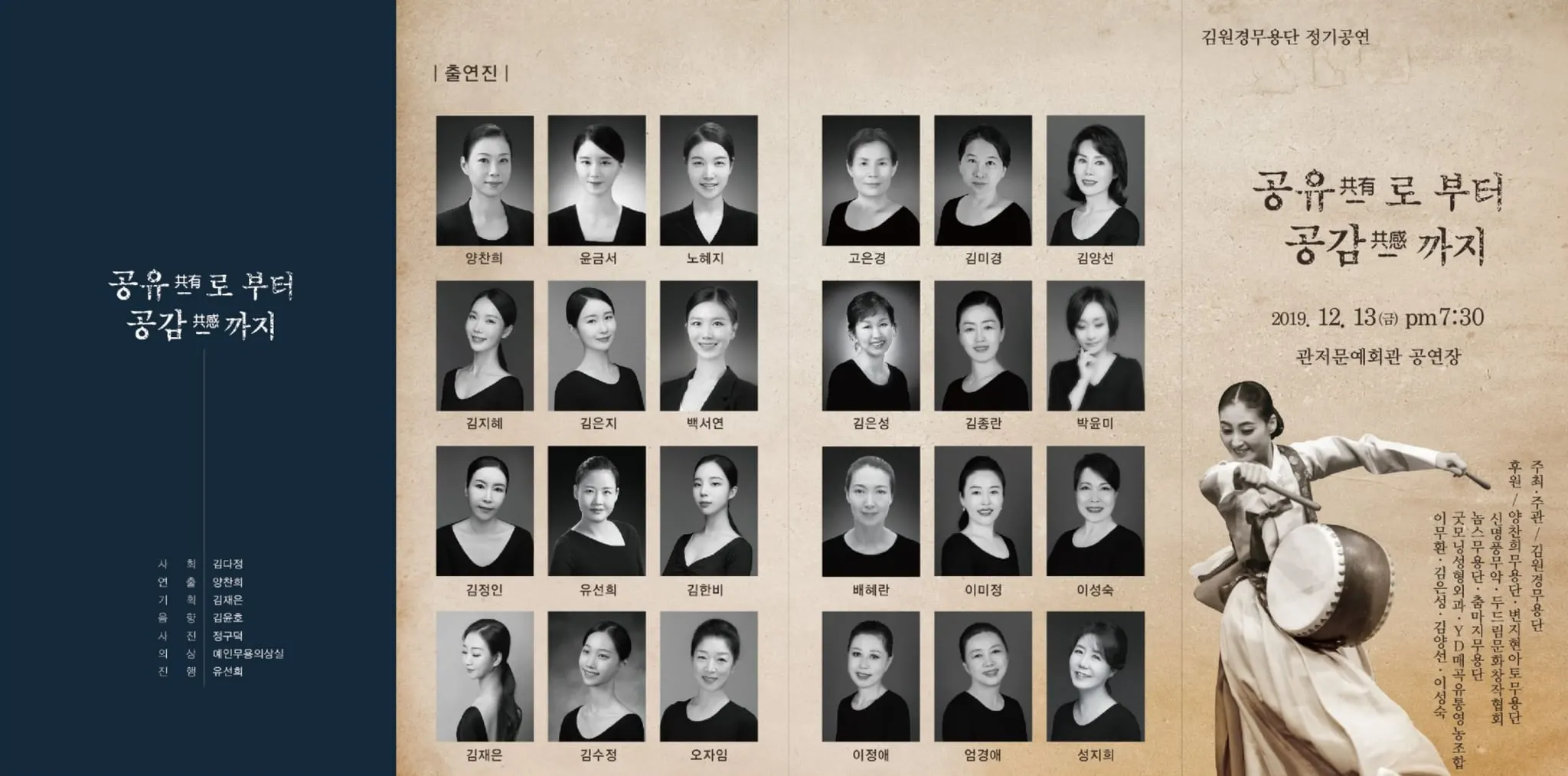
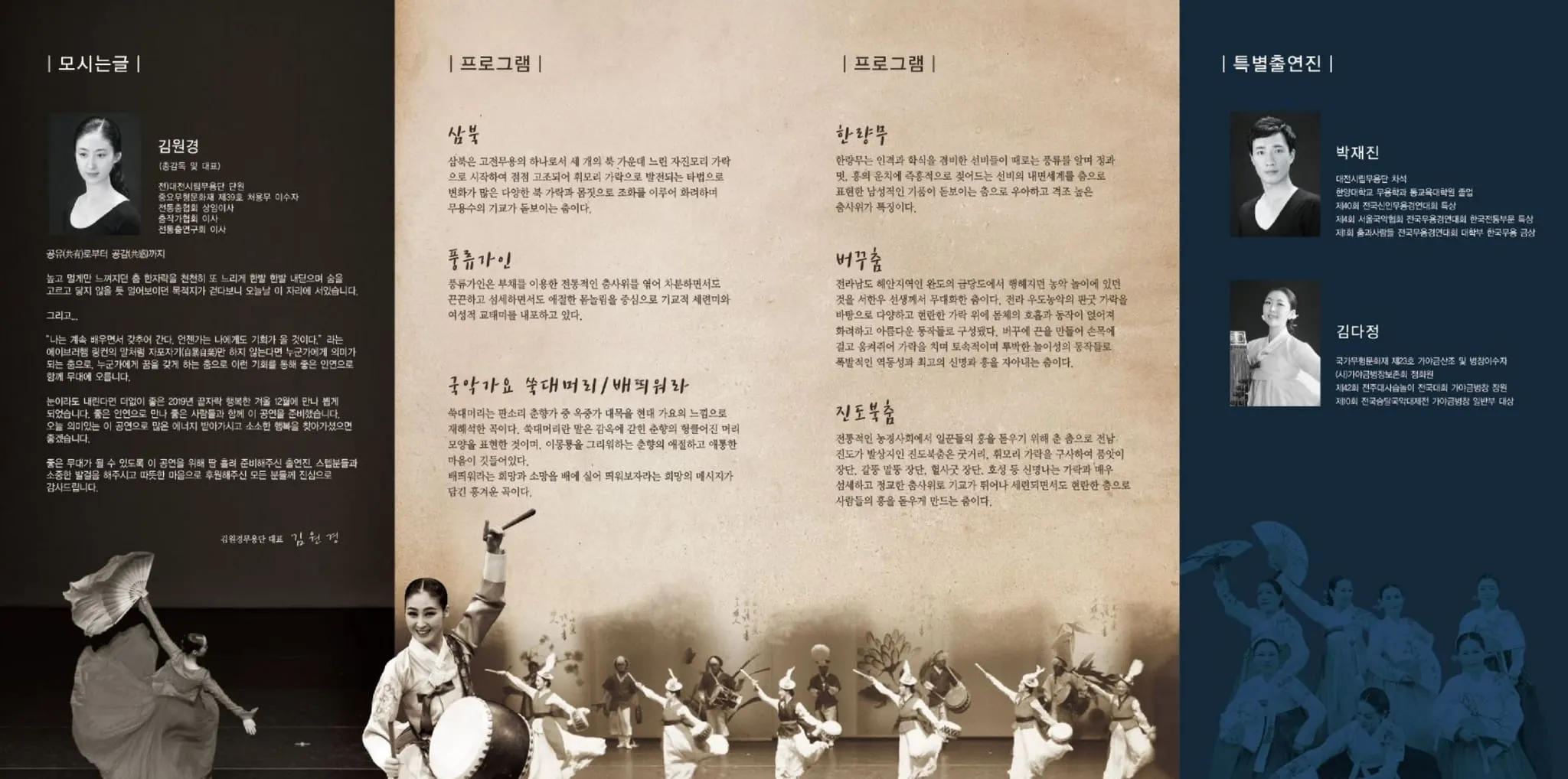
2019

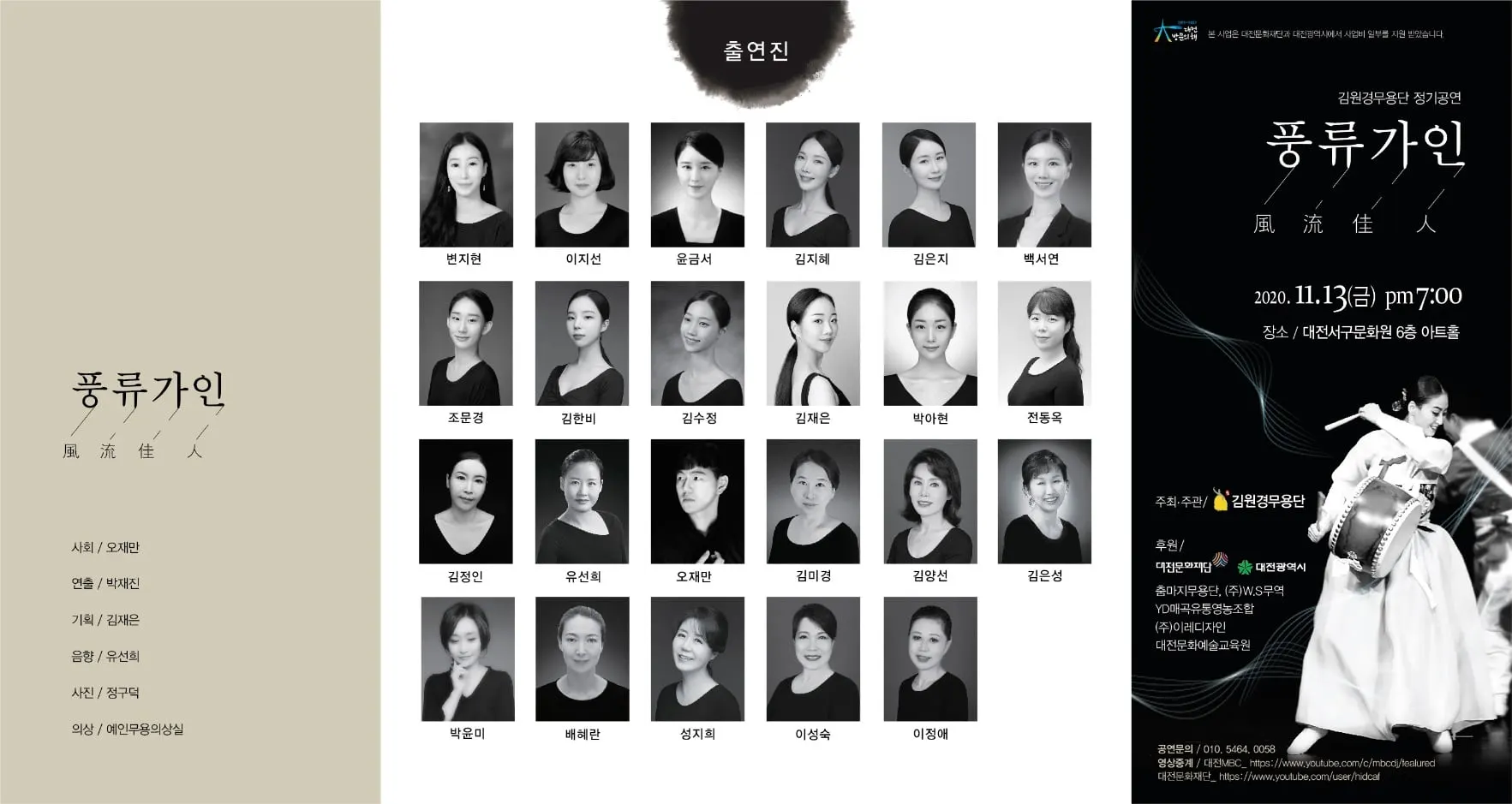
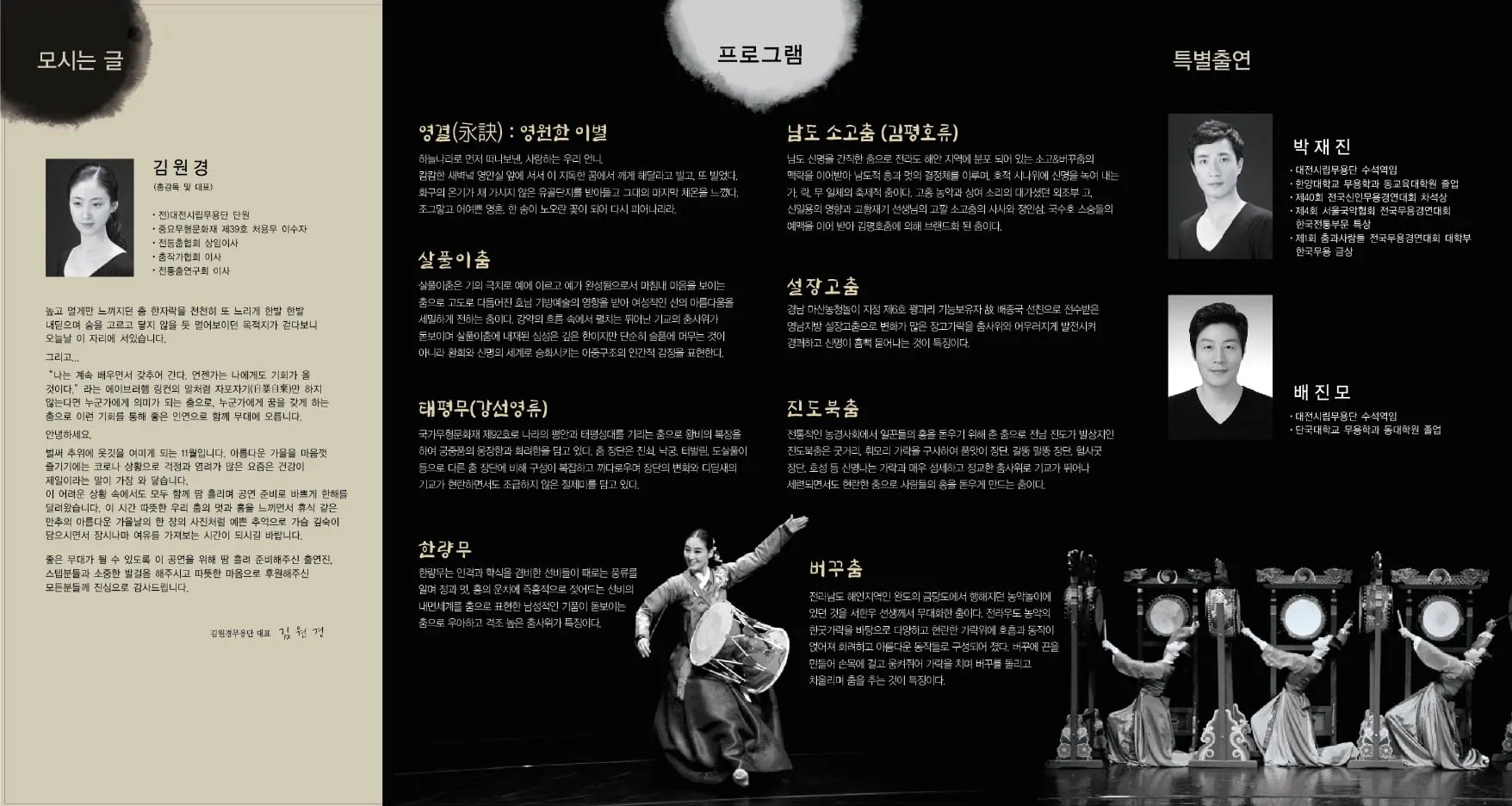
2020

2021

2022

2023

2024

2025

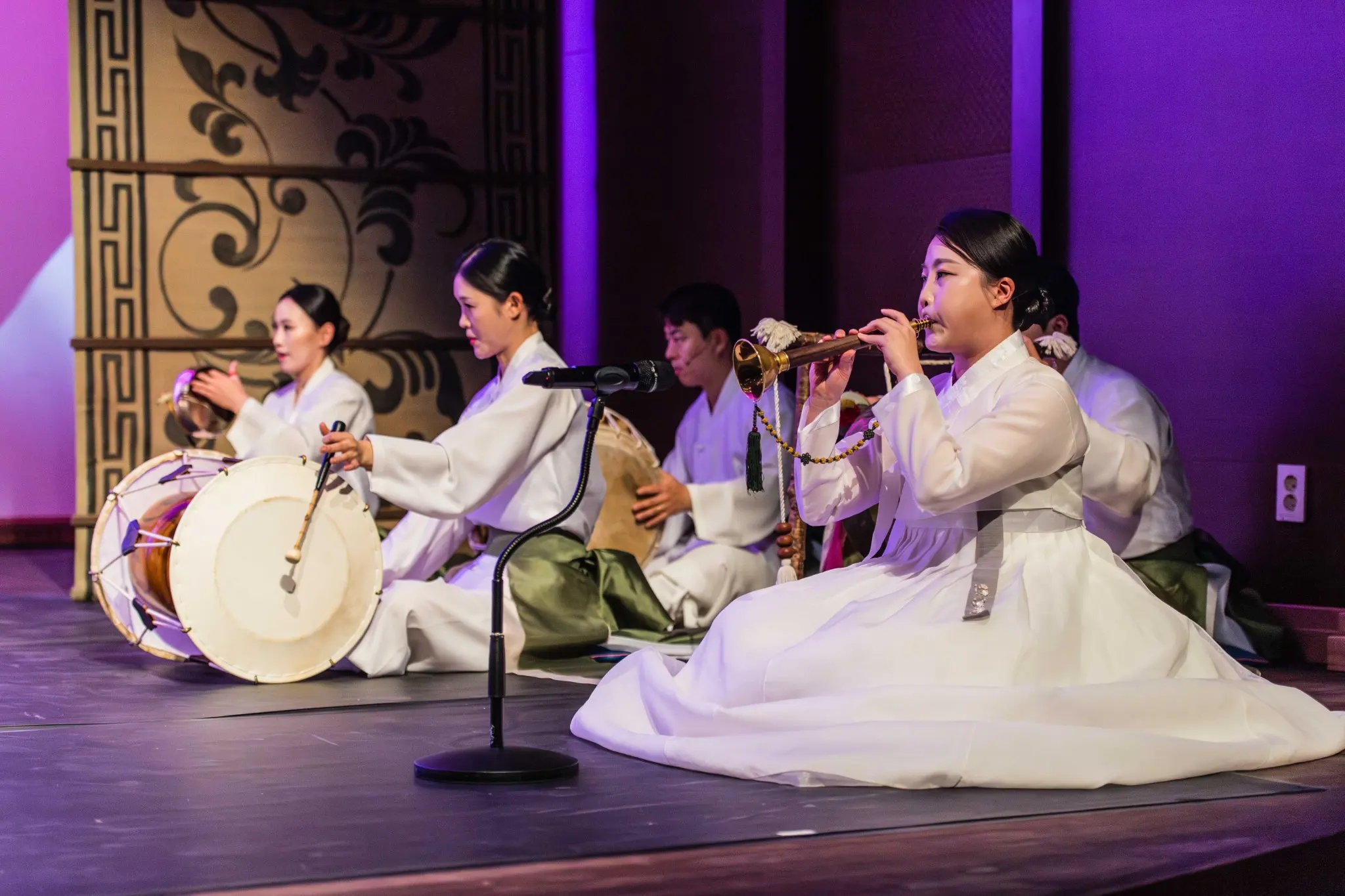
Korean traditional music live performance

CULTURAL EXCHANGE

Meeting the world
through Korean dance

Kim Won Kyoung Dance Company regards traditional dance and gugak as a language of cultural communication beyond words. Beyond performances in Korea, we seek to share the dignity of Korean traditional arts through international exchange and public cultural diplomacy.

Tradition TRADITION
Community COMMUNITY
Friendship FRIENDSHIP

FILM & MEDIA

Recording Movement